







Solar Lighting Moves Into the Mainstream
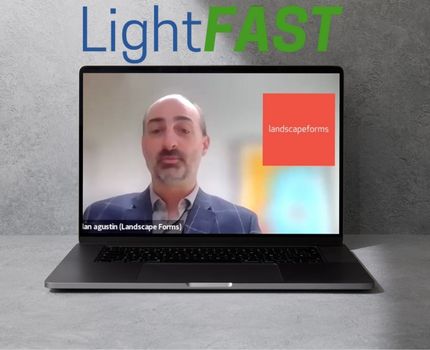
Solar lighting was once viewed as a solution for remote or off-grid locations. Today, advances in technology are expanding its role across public spaces and designed landscapes. On a recent episode of Lightfast, I spoke with Jordan Agustin, President of the Lighting Division at Landscape Forms, about how solar lighting has matured.
Solar is now being specified to solve practical site challenges. Resiliency is a major driver, especially in public spaces that must remain illuminated during power outages. Solar lighting also supports brownfield redevelopment projects. These sites often limit trenching or traditional electrical infrastructure. In those cases, solar allows designers to introduce lighting with minimal disruption.
Technology Advances Power Year-Round Performance
Many perceptions of solar lighting are based on earlier systems. Those products often required ideal “sunbelt” conditions. According to Agustin, today’s high-performance solar systems work reliably across a wide range of climates, including regions with limited sunlight.
Battery improvements have played a key role. Energy density has increased, allowing batteries to become smaller. Operating temperature ranges have expanded to support both hot and cold climates. Costs have also declined, driven by global manufacturing growth linked to the electric vehicle market.
These hardware gains are paired with intelligent control algorithms. The system actively manages energy collection and usage. Light output adjusts based on local conditions, including extended periods of cloud cover. This ensures illumination throughout the night without fully draining the battery. In northern climates, systems can deliver dusk-to-dawn performance with strategic dimming during low-activity hours.
Design, Maintenance, and Long-Term Value
Solar lighting has also improved aesthetically. Compact batteries and refined panel designs have eliminated the bulky look of earlier products. Designers no longer need to accept visual compromises when specifying solar.
Maintenance requirements are minimal. Outside of occasional cleaning in environments such as coastal locations, little ongoing service is required. Battery replacement is typically not needed for 10 to 15 years. Intelligent battery management helps extend service life by limiting deep discharge.
When specifying solar lighting, Agustin highlighted two key considerations. Panels should maintain a clear southern exposure. Luminaire wattage must be properly matched to panel size. When solar aligns with project goals, it can deliver reliable illumination, long-term value, and design flexibility without compromise.