







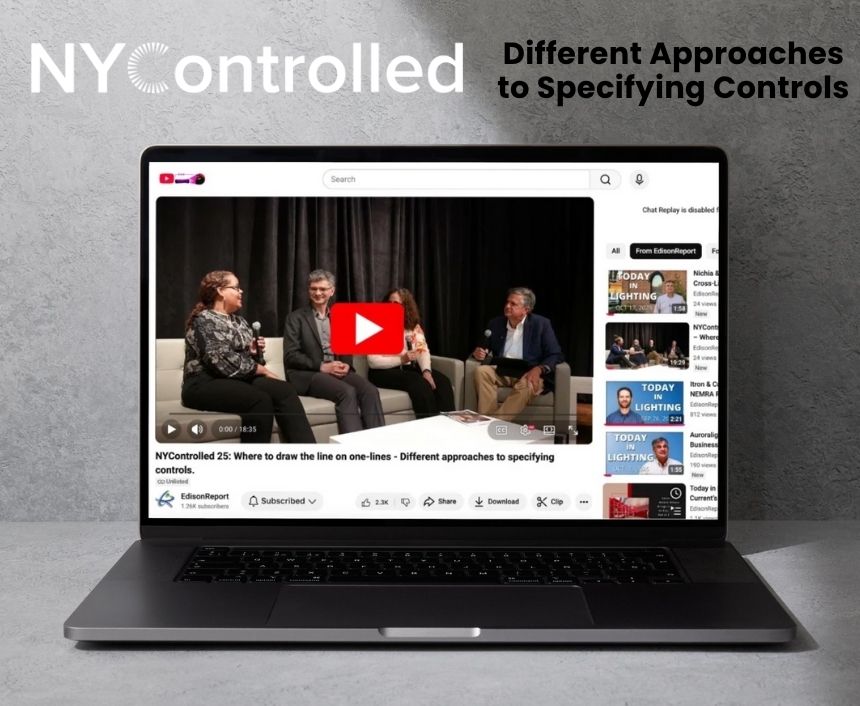
At NY Controlled 2025, I sat down with Shoshanna Segal, Kenny Schutz, and Nathalie Faubert to discuss how specifiers approach the complex world of lighting controls — from defining design intent to knowing when to bring in extra help.
Defining the Role of the Rep
“I’m going to say the rep never takes the lead,” said Segal. “Lighting controls are about realizing intent, and that belongs to the designer. The rep is an assist, but never in charge.”
Schutz and Faubert agreed, noting that reps are brought in only after a system is selected to support design execution, not direction.
How Deep Should Designers Go?
Segal admitted she often goes “too deep” into controls, with opinions on protocols and wiring, but said most designers should stop at schematic-level documents. Faubert’s firm, CBB Lighting Design, provides load schedules and system specs before asking manufacturers to prepare one-line diagrams for review. Schutz’s team, however, draws their own and specifies down to the part number.
When to Bring in an Integrator
“For me, the bright red line is when there’s code to be written,” Segal said. “That’s when I bring in an integrator — or when I need another throat to choke.”
Faubert added that her firm brings in integrators for residential or manufacturer-required programming, while Schutz includes qualifications for a “control supplier” directly in the specification.
Balancing Artistry and Precision
“There’s no conflict between creativity and technicality,” Schutz said. “You can absolutely do both.” Segal agreed, describing technical problem-solving as its own creative act, while Faubert emphasized that design must balance innovation, practicality, and budget.
In the end, the panelists agreed that understanding — not delegation — drives success. “Future-proofing is part of good design,” Segal concluded. “It’s about ensuring your vision continues to live on.”