







Four Projects Earn Top Honors at the 2026 IES Illumination Awards
The Brooklyn Paramount, Memorial Brumadinho, SCADstory and the USA Pavilion at Expo 2025 Osaka were recognized with Awards of Distinction during IES26 in Denver.
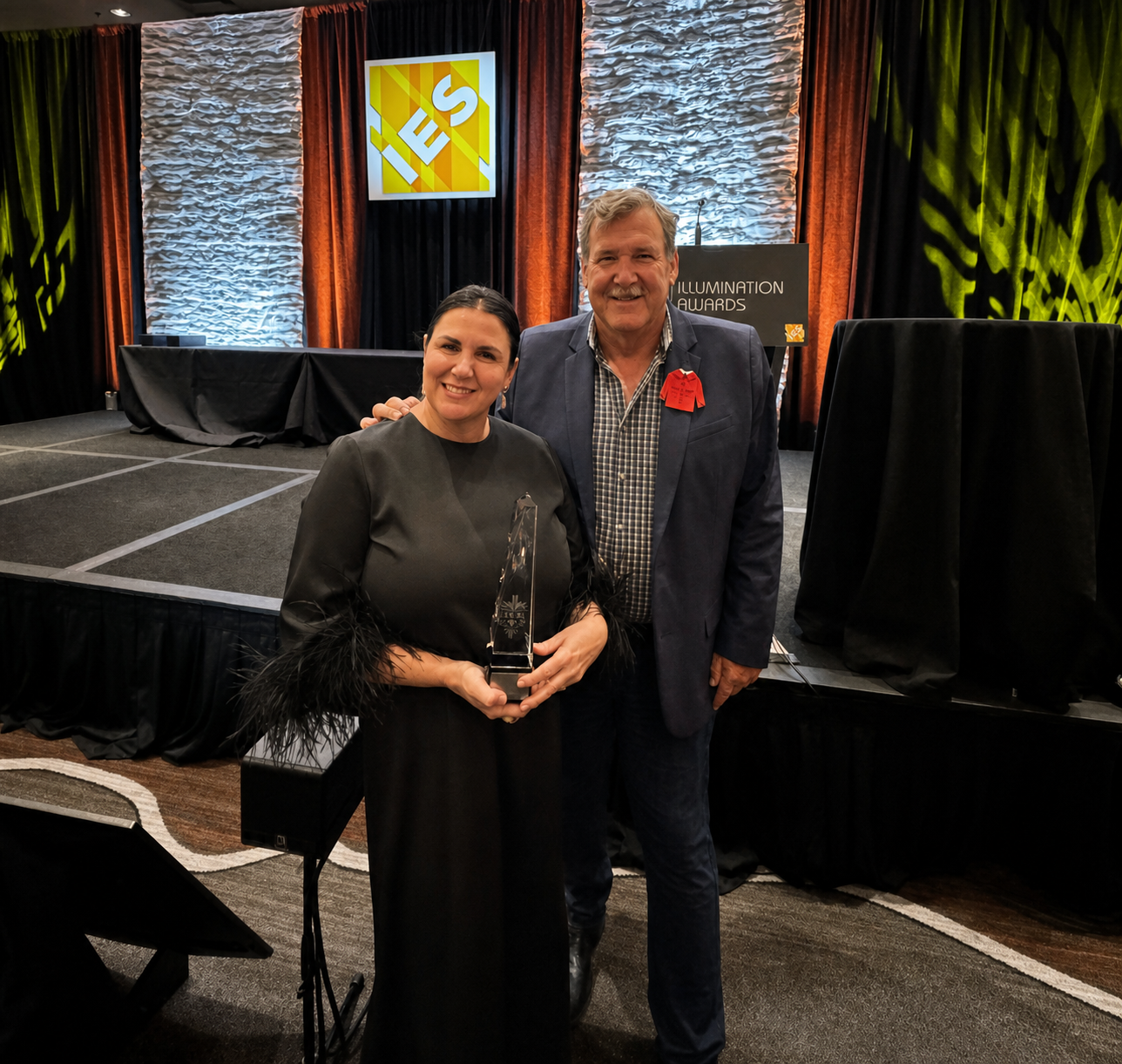
The Illuminating Engineering Society honored 17 projects at the 53rd Annual IES Illumination Awards. The ceremony took place August 14 during IES26: The Lighting Conference in Denver and was sponsored by Acuity Brands.
This year, the program recognized four Special Citations, nine Awards of Excellence and four Awards of Distinction. As the program’s highest honor, the Award of Distinction recognizes extraordinary achievement in lighting design.
The four top projects showed the wide-ranging power of light. They included a restored entertainment landmark, a memorial to an industrial tragedy, an immersive university experience and a U.S. pavilion at a world exposition.
Brooklyn Paramount Returns to Its Original Purpose
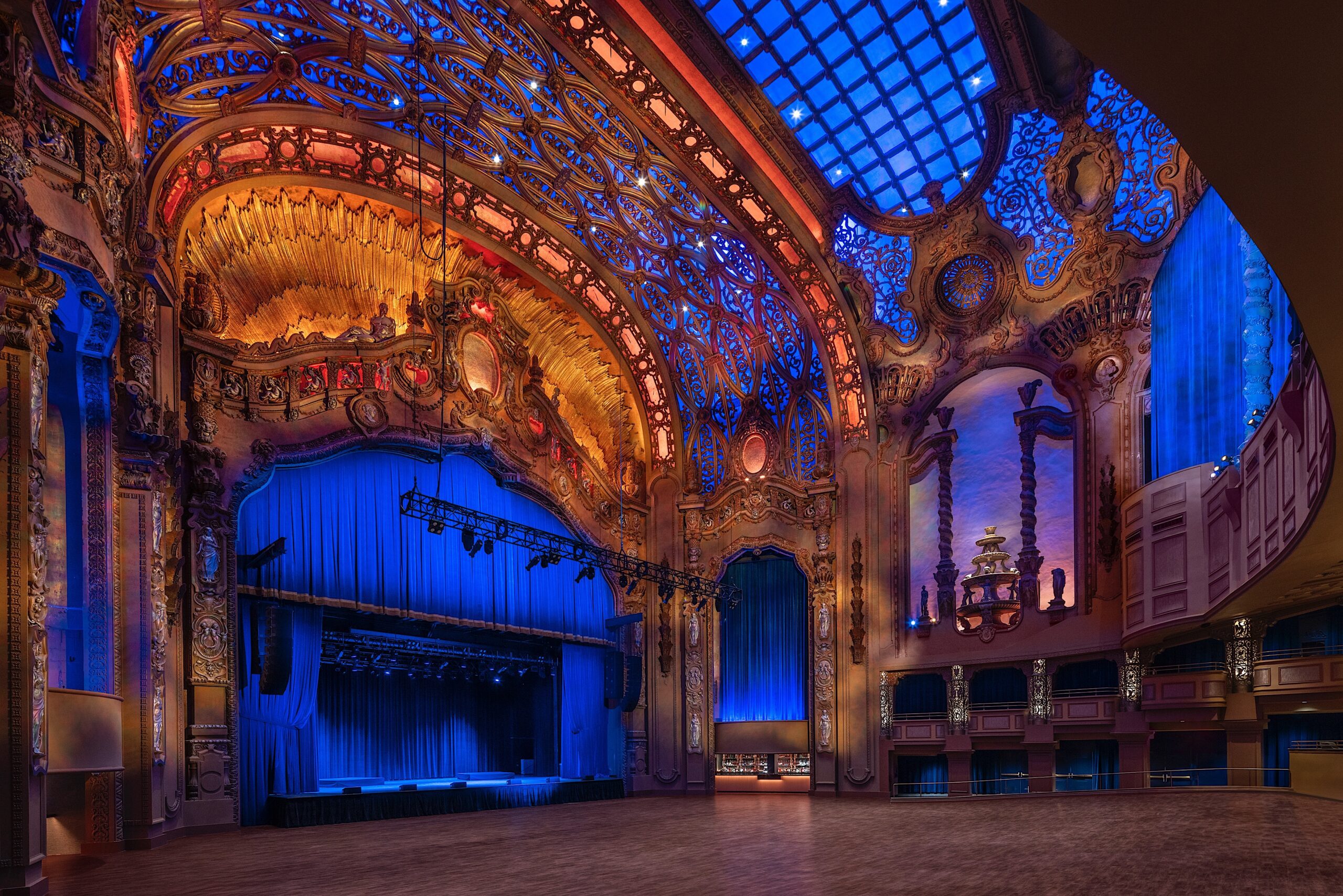
The Brooklyn Paramount in Brooklyn, New York, received an Award of Distinction for Interior Lighting Design.
Visual Terrain Inc. designed the lighting. The project team included Michael Mahlum, Lisa Passamonte Green, Jacqueline Grey, Steeve Vajk, Chris Barbee, John Jenkinson and Caleb Werkmeister.
For approximately six decades, the historic venue operated as an indoor basketball court. Its renovation returned the building to its original purpose as a music and entertainment destination.
To revive the space, the lighting team restored historic decorative fixtures and added modern color-changing technology. Designers also concealed sources wherever possible. This approach allowed the light to reveal the building’s architectural details without distracting from them.
During the acceptance remarks, the recipient recalled first entering the building when it was still a basketball court. Even then, its history—and its potential—remained visible.
The finished project respects the Paramount’s past while providing the flexibility required by a modern performance venue.
Memorial Brumadinho Uses Light to Preserve Memory
The evening’s most emotional recognition went to Memorial Brumadinho in Córrego do Feijão, Brumadinho, Minas Gerais, Brazil.
Atiaîa Lighting Design received an Award of Distinction for Experiential Lighting Design. Mariana Novaes and Pedro Ferreira designed the lighting.
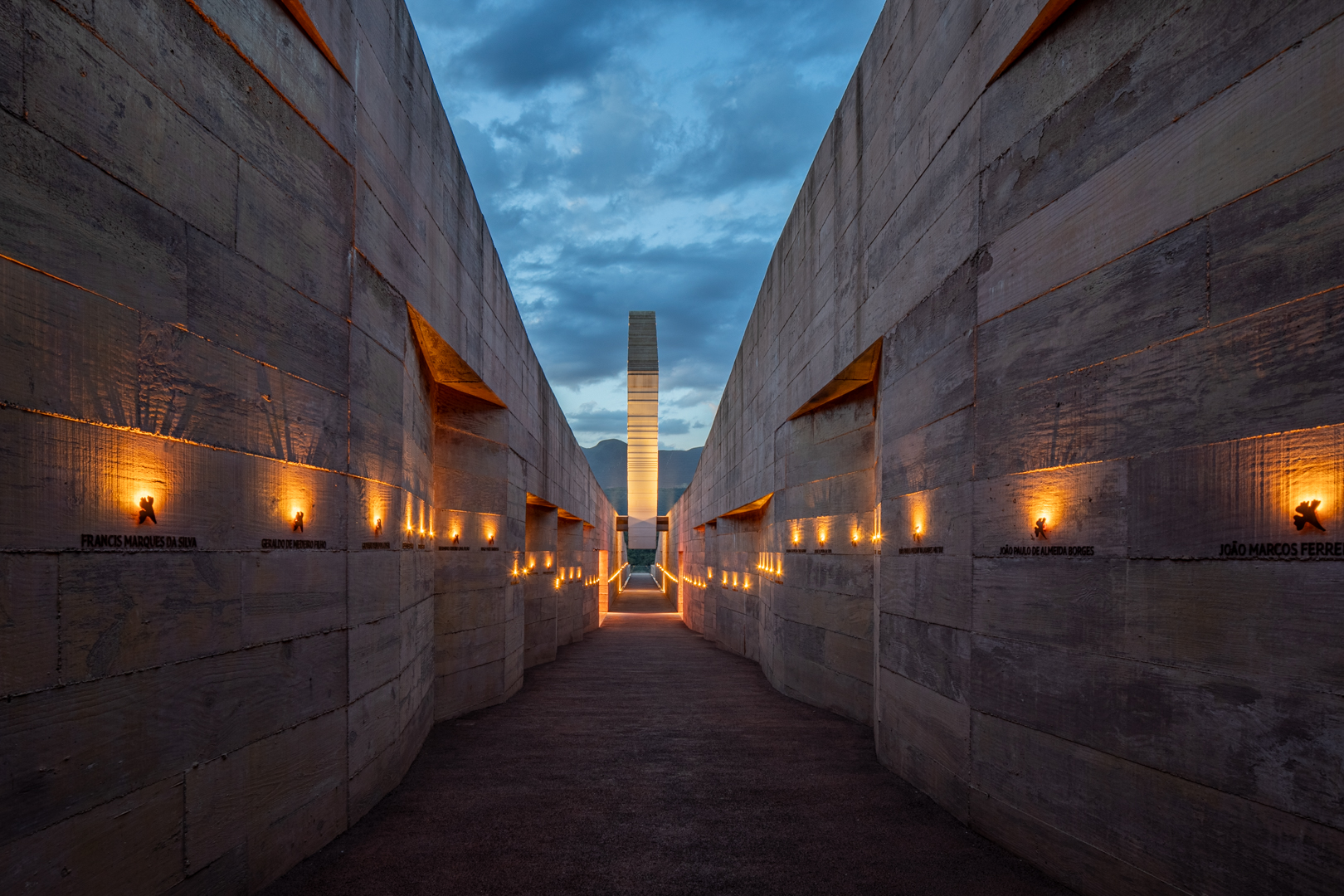
The memorial honors the 272 people who died in the 2019 Brumadinho dam collapse.
Light and Darkness Work Together
Light and darkness create an atmosphere of remembrance, reflection and healing throughout the memorial.
Electric light reveals messages, symbols and architectural elements that honor the victims. Darkness represents absence and creates room for pause and introspection. Rather than competing with the memorial’s purpose, the lighting quietly supports its story.
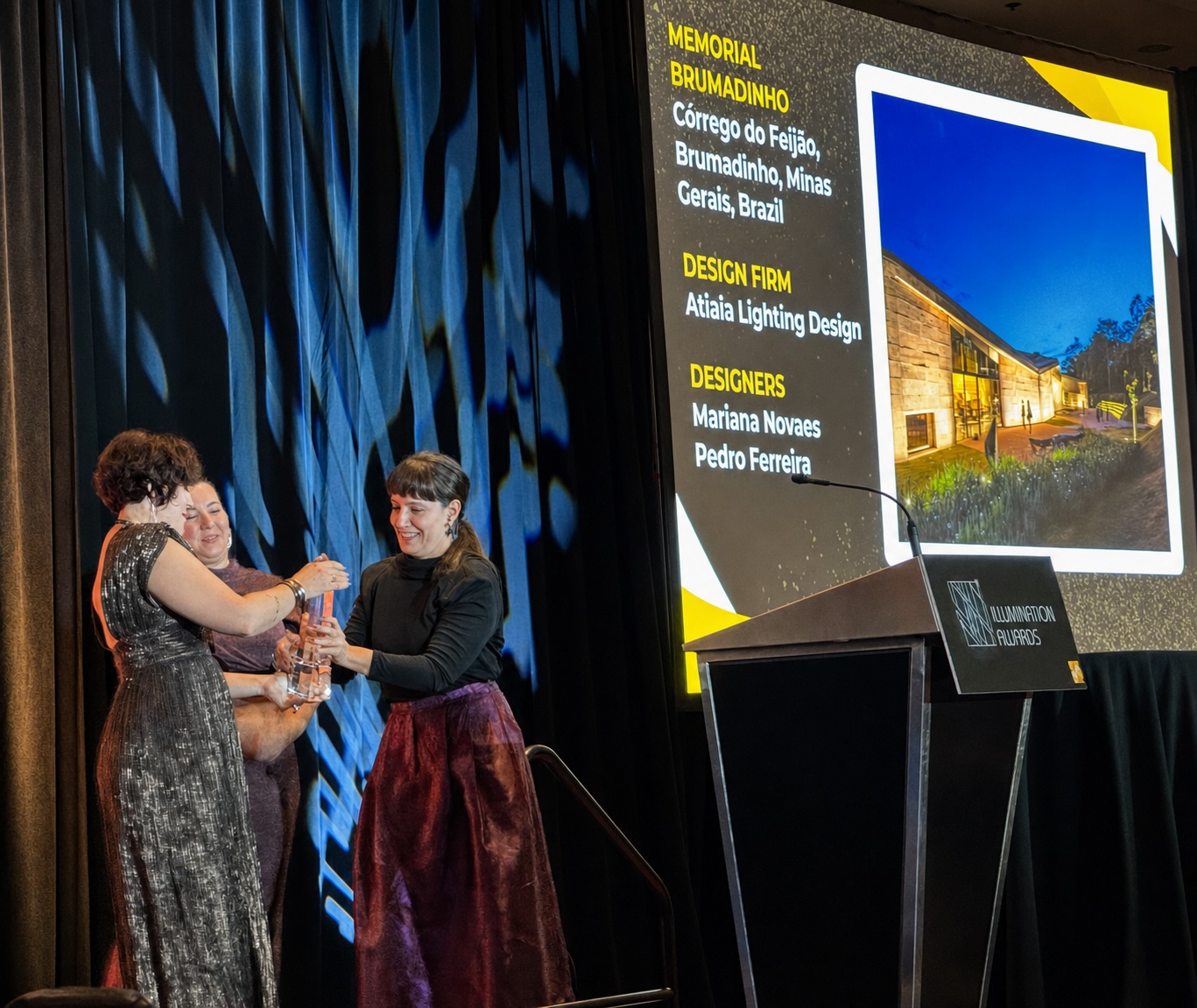
“Can I be allowed to be happy with such a sad story?” the recipient asked while accepting the award.
The project team viewed the memorial as more than a design assignment. It offered a way to tell the world what happened in Brumadinho. It also honors families who continue to seek justice.
“We developed this project to make people feel and develop an emotional connection with the space,” the recipient explained. “Please share the project and the story of the memorial so that the victims’ memories are always honored.”
Those remarks reminded the audience that lighting can carry emotional, cultural and ethical responsibilities.
One Team Earns Two Awards of Distinction
NYXdesign and BRC Imagination Arts received two of the evening’s four Awards of Distinction. Emanuel Treeson earned recognition for both SCADstory in Atlanta and the USA Pavilion at Expo 2025 Osaka.
Although the projects differ greatly in scale and purpose, both use light as an essential part of immersive storytelling.
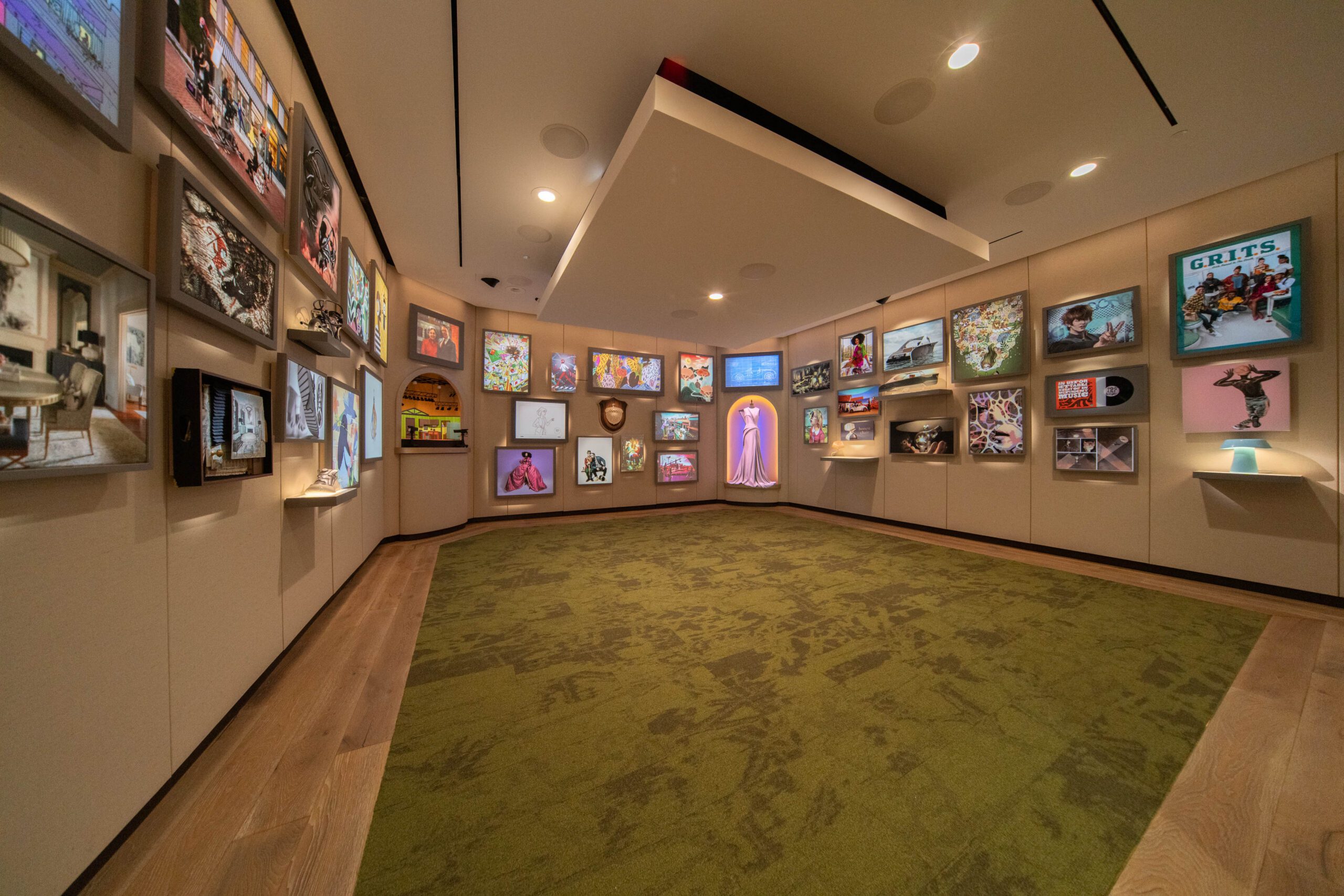
SCADstory
The Savannah College of Art and Design created SCADstory for prospective students and their families. The experience shares the university’s history, growth and creative mission.
It combines hand-drawn animation, 360-degree projection mapping and sculptural scenic elements. That combination presented a lighting challenge.
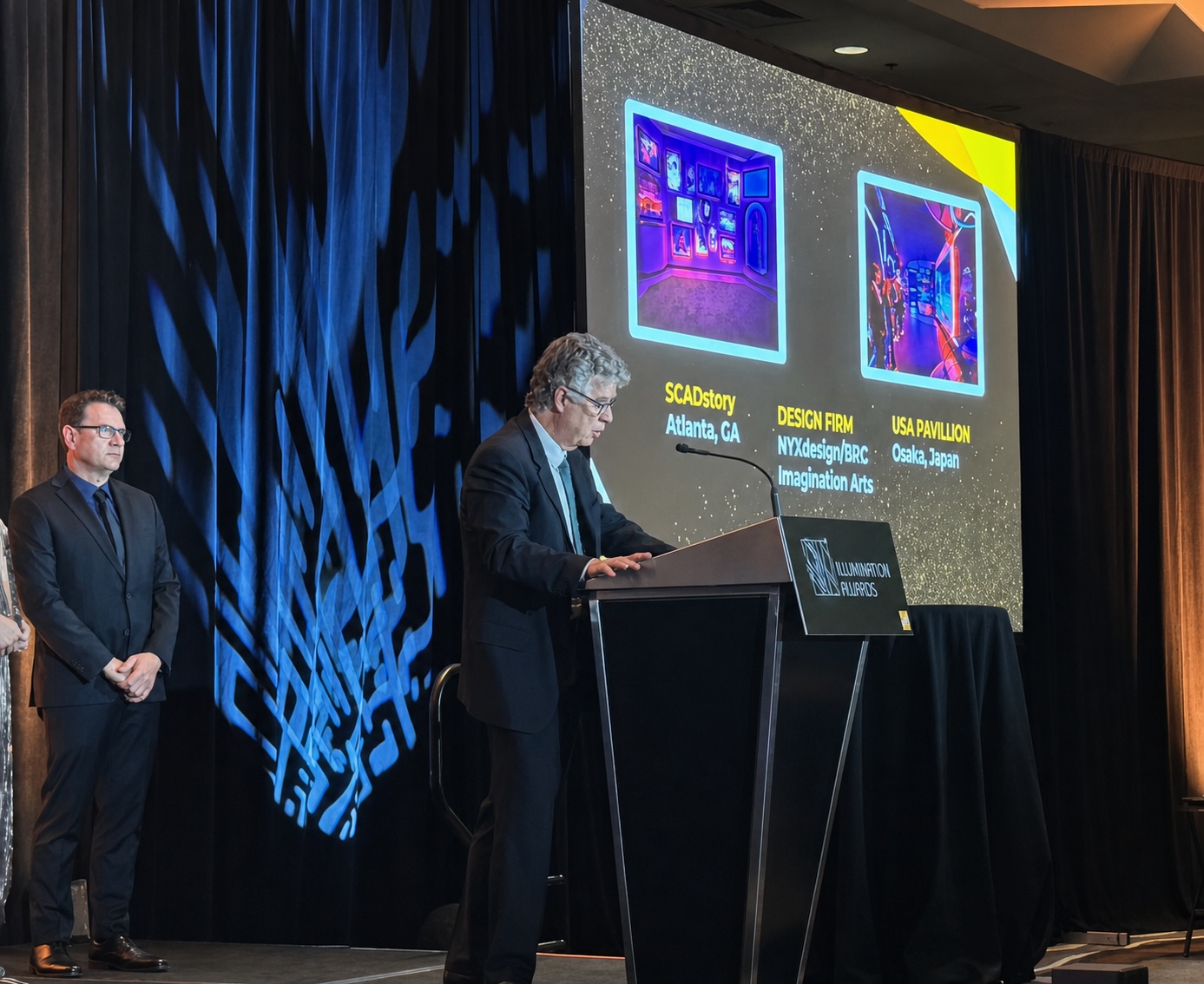
Traditional theatrical fixtures could have competed with the projected media. In response, the team developed what it calls “virtual lighting.”
Designers programmed virtual sources through a conventional lighting console. The system controls position, color, intensity, focus, texture and movement much like physical fixtures.
This approach allows light to exist inside the projected world instead of appearing as a separate layer.
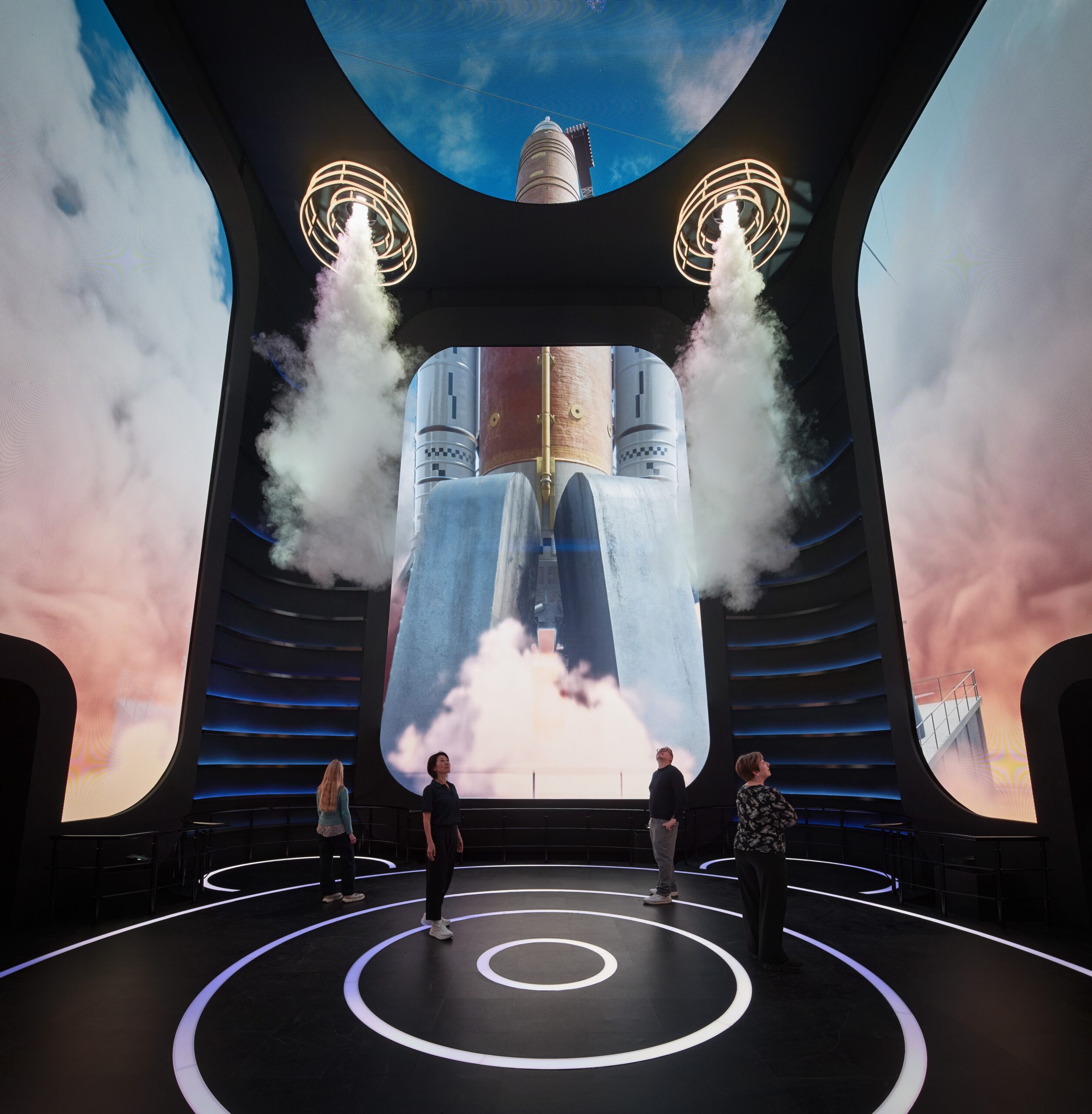
USA Pavilion at Expo 2025 Osaka
The USA Pavilion presented a different challenge. Its theme, “Imagine What We Can Create Together,” guided visitors through seven scenes supported by music, media, lighting and special effects.
Visitors reached the experience’s climax in an immersive theater that simulated a Moon mission. Powerful audio shook the floor, while fog and flame effects strengthened the illusion of a rocket launch.
The lighting system controlled the special effects and responded to the media narrative. It also followed the musical progression of the experience.
During his acceptance remarks, the speaker praised the other designers honored that evening. He also described the challenge shared by his team’s two projects: Light needed to support the story without drawing attention away from it.
Both awards highlighted a growing trend in experiential design. The boundaries among lighting, media, architecture and show control continue to disappear.
Nine Projects Receive Awards of Excellence
The IES also presented nine Awards of Excellence. These awards recognize exceptional contributions to the art and science of light.
The recipients included:
- Expo 2025 Osaka—Grand Ring Lighting in Osaka, Japan
- Indianapolis Motor Speedway Museum in Indianapolis
- Jacobs Music Center in San Diego
- Joslyn Art Museum Expansion in Omaha
- Sculpting with Light in Los Angeles
- Shanghai Velodrome in Shanghai
- Thomas and Vivian A. Wong Honor Tower in Greenville, South Carolina
- UNK Central Green at University Village in Kearney, Nebraska
- Woohoo Dubai in Dubai
The projects covered museums, performing arts, hospitality, public spaces and major international venues.
Several shared a common theme: Successful lighting does not always demand attention.
At the Joslyn Art Museum Expansion, daylight and electric light work together as one discreet system. Restored historic fixtures join modern sources inside Jacobs Music Center, a theater dating to 1929. Meanwhile, a flexible system at the Indianapolis Motor Speedway Museum supports a collection that changes as racing history continues to unfold.
Recognition Based on Individual Merit
The IES does not treat the Illumination Awards as a competition among projects. Instead, judges evaluate each entry independently using the program’s established criteria.
This approach helps explain the wide range of work honored in 2026. A project does not need the largest budget, newest technology or most dramatic presentation to earn recognition. It must demonstrate professionalism, ingenuity and originality while meeting its design goals.
Each Award of Distinction captured that philosophy. The four projects used light to restore, remember, educate or transport an audience into another world.
Together, they showed that lighting design can do more than change how a place looks. It can shape how people experience, understand and remember it.