





RAB Patent Stay Motion Signals Strategic Pause in Invictus Lawsuit
RAB Lighting has filed a motion to pause its patent dispute with Invictus Lighting. The request follows a USPTO decision to reexamine the patent at the center of the case. The move could delay litigation and reshape the outcome for both parties.
USPTO Reexamination Drives Case Strategy
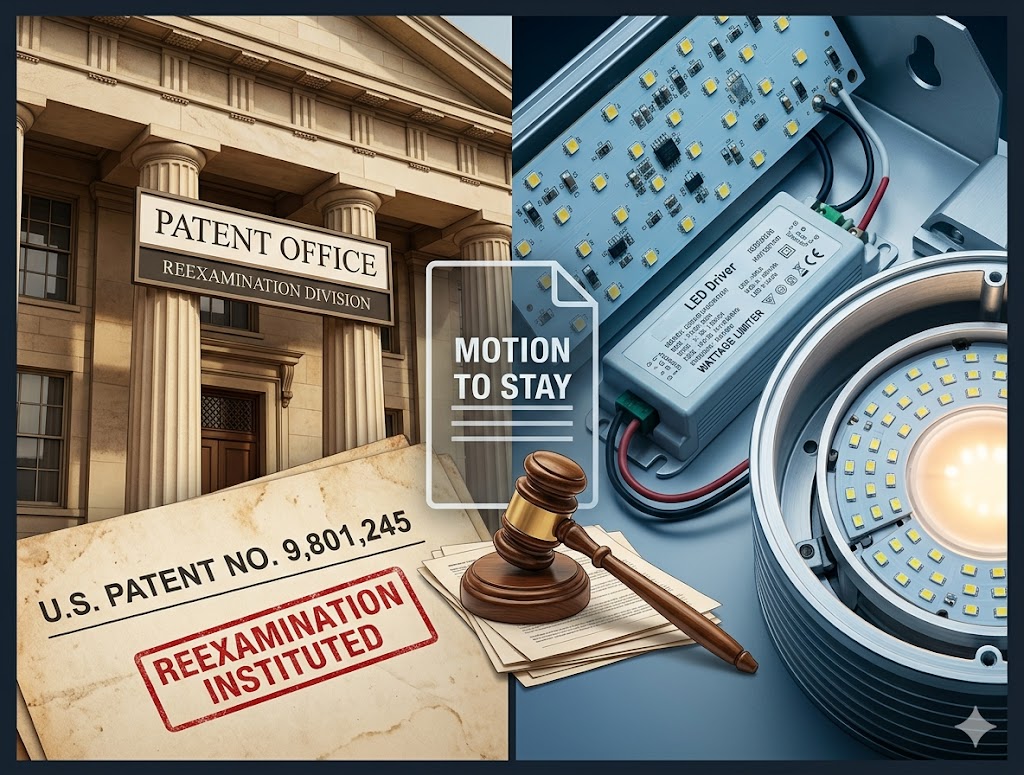
The RAB patent stay motion centers on the ’245 patent, which Invictus asserts covers LED driver technology. RAB challenged the patent at the U.S. Patent and Trademark Office. The USPTO agreed to review it, citing “substantial new questions of patentability.”
That phrase carries weight. It signals that prior art may affect whether the patent should have been granted. It also opens the door to claim cancellation or narrowing.
RAB argues that this review could directly impact the lawsuit. If the USPTO cancels key claims, the case may collapse. If the claims narrow, the scope of the dispute could shrink.
Early Stage Favors a Stay
The RAB patent stay motion highlights the timing of the case. Discovery has just begun. No depositions have taken place. The court has not set a trial date.
Courts often grant stays in early-stage cases. The reasoning is simple. It avoids spending resources on claims that may not survive review.
RAB also notes that claim construction has not started. That phase often drives cost. Pausing now could prevent unnecessary expense for both sides.
Limited Prejudice to Invictus
Another key point in the RAB patent stay motion is the lack of immediate harm to Invictus. The complaint seeks damages but does not request an injunction.
That matters. Without a request to stop sales, the court may view delay as less harmful. RAB argues that Invictus can still pursue damages later if the patent survives.
This argument aligns with past decisions. Courts often weigh whether a delay causes competitive harm. In this case, RAB positions the impact as limited.
Potential Outcomes for the Lighting Industry
The RAB patent stay motion has broader implications for the lighting sector. Patent disputes around LED drivers and controls continue to rise. Many involve similar claims around efficiency, dimming, and output control.
If the USPTO cancels or narrows the ’245 patent, it could affect other manufacturers. It may also influence how future patents are drafted and challenged.
For specifiers and distributors, the outcome may determine product availability and pricing. A prolonged case could create uncertainty. A narrowed patent could reduce risk across the channel.
What Comes Next
The court will decide whether to grant the stay. If approved, the case will pause while the USPTO completes its review. That process can take months or longer.
If denied, litigation will proceed on parallel tracks. That scenario increases cost and complexity for both parties.
For now, the RAB patent stay motion represents a calculated move. It shifts the focus to the USPTO. It also signals confidence in the prior art challenge.