






Amsterdam, the Netherlands – Marking UNESCO’s International Day of Light, the Signify Foundation announced today that it has enabled access to light for 14.8 million people globally since 2017. The Foundation’s 2025 Annual Report emphasizes the critical role of sustainable lighting in building safer, healthier and more thriving communities worldwide.
Community lighting remains underfunded and overlooked in development planning, despite its proven contribution to safer streets, better health outcomes, and stronger resilience. Today, the Foundation is calling on state actors, governments, finance institutions and the private sector to treat sustainable lighting as core infrastructure and to fund, maintain and govern it accordingly.
“Lighting is often treated as a secondary component of development, when in reality it is fundamental. Without it, clinics close at sundown, children stop studying, and women don’t feel safe walking home,”says Mario Giordano, Chair of the Signify Foundation. “The opportunity ahead is to systematically integrate lighting into broader development, climate, and public infrastructure strategies.”
2025 impact in numbers
In 2025 the Foundation’s initiatives covered 22 projects in 19 countries, with women and girls making up 52% of beneficiaries.
For over 600 million people worldwide, darkness still limits daily life. By extending a community’s active hours, lighting provides more than just visibility; it enhances safety, dignity, and economic
opportunity. Alongside lighting, the Foundation’s Brighter Communities Program delivers training in energy efficiency, systems installation and maintenance. The program operates across three key areas:
Brighter Learning: giving children safe spaces to learn and play after dark by lighting more than 1,000 schools, children’s homes, and playgrounds.
Brighter Health: helping improve the quality of care by providing reliable lighting to 161 hospitals, health centers, and clinics.
Brighter Living: making streets and shared spaces safer by lighting 152 villages and informal Settlements.
These projects directly contribute to the United Nations Sustainable Development Goals, with a focus on SDG 3 (Good Health and Well-Being), SDG 4 (Quality Education), SDG 5 (Gender Equality), SDG 7 (Affordable and Clean Energy) and SDG 11 (Sustainable Cities and Communities).
From grants to lasting resilient systems
The Foundation’s experience points to a critical lesson: lighting infrastructure in underserved areas only succeeds when it is owned by the local community after it is installed. Signify Foundation is therefore focused on approaches that strengthen local capacity, attract complementary public and private investment, and ensure systems are maintained for the long-term.
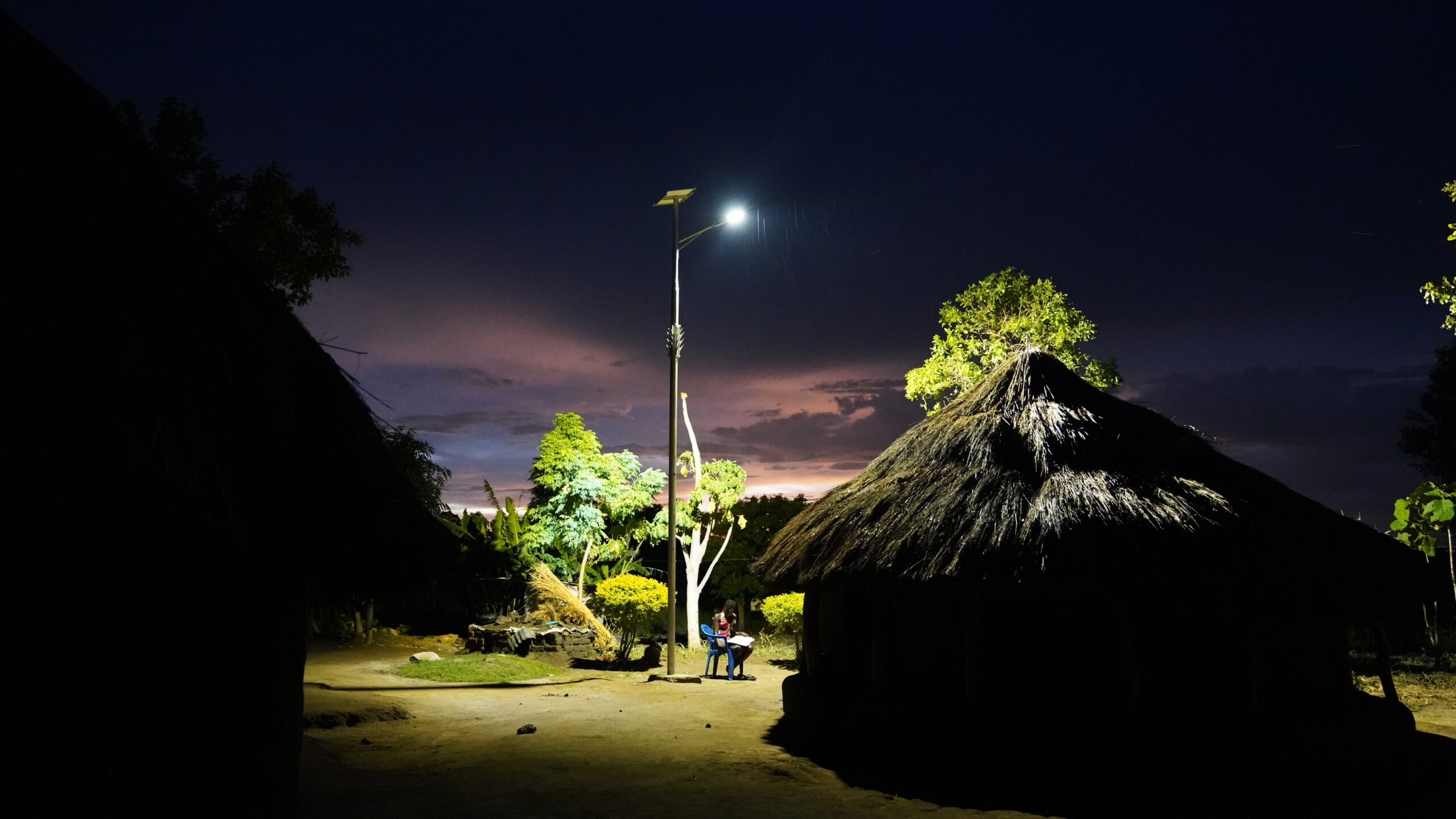
The Palabek Refugee settlement project in Uganda, delivered in partnership with UNHCR, the UN Refugee Agency, shows how this works in practice. Community discussions revealed how lighting placements could better reflect the way residents used shared spaces. Residents were trained to install, maintain, and protect the systems themselves with clear roles and accountability in place. This approach gave them new, employable skills and a direct stake in the infrastructure they built together. After more than one year of installation, nearly 100% of the lighting systems at Palabek remain operational.
Strengthening collaboration for long-term impact
The Uganda project proves that community participation and local ownership secure the long-term sustainability of infrastructure.
“When residents of a community can point to a streetlight and say, ‘We installed that,’ the project becomes part of the community rather than an external intervention,” says Yue Cui, Director of the Signify Foundation. “On this International Day of Light, we are asking public, and private-sector partners to treat public lighting as essential infrastructure that supports safety, mobility, and economic activity.”
Detailed findings from the 2025 initiatives are available in the Signify Foundation’s 2025 Annual Report.
About Signify Foundation
The Signify Foundation, primarily funded by Signify, is an independent, non-profit organization with a mission to enable access to light for underserved communities across the world. For more information about the Signify Foundation, visit the website: https://www.signify.com/global/our-company/signify-foundation.
EdisonReport Editor’s Note:
The Signify Foundation’s 2025 Annual Report is published on UNESCO’s International Day of Light, an annual global observance held on May 16 that recognizes the role of light in science, culture, and sustainable development. Since 2017, the Foundation has reached 14.8 million people across underserved communities worldwide, with 2025 initiatives spanning 22 projects in 19 countries. The report highlights a community ownership model pioneered in Uganda’s Palabek Refugee Settlement — where residents were trained to install and maintain their own lighting infrastructure — as a replicable framework for ensuring long-term system sustainability in areas where external maintenance support is unavailable. The Foundation is using this year’s report to call on governments, development finance institutions, and the private sector to classify sustainable public lighting as core infrastructure rather than a secondary development consideration.