







At Signify Capital Markets Day, As Tempelman Details Strategy for Growth and Profitability
Editor’s Note: This is the first of a three-part series on Signify’s Capital Markets Day presentation.
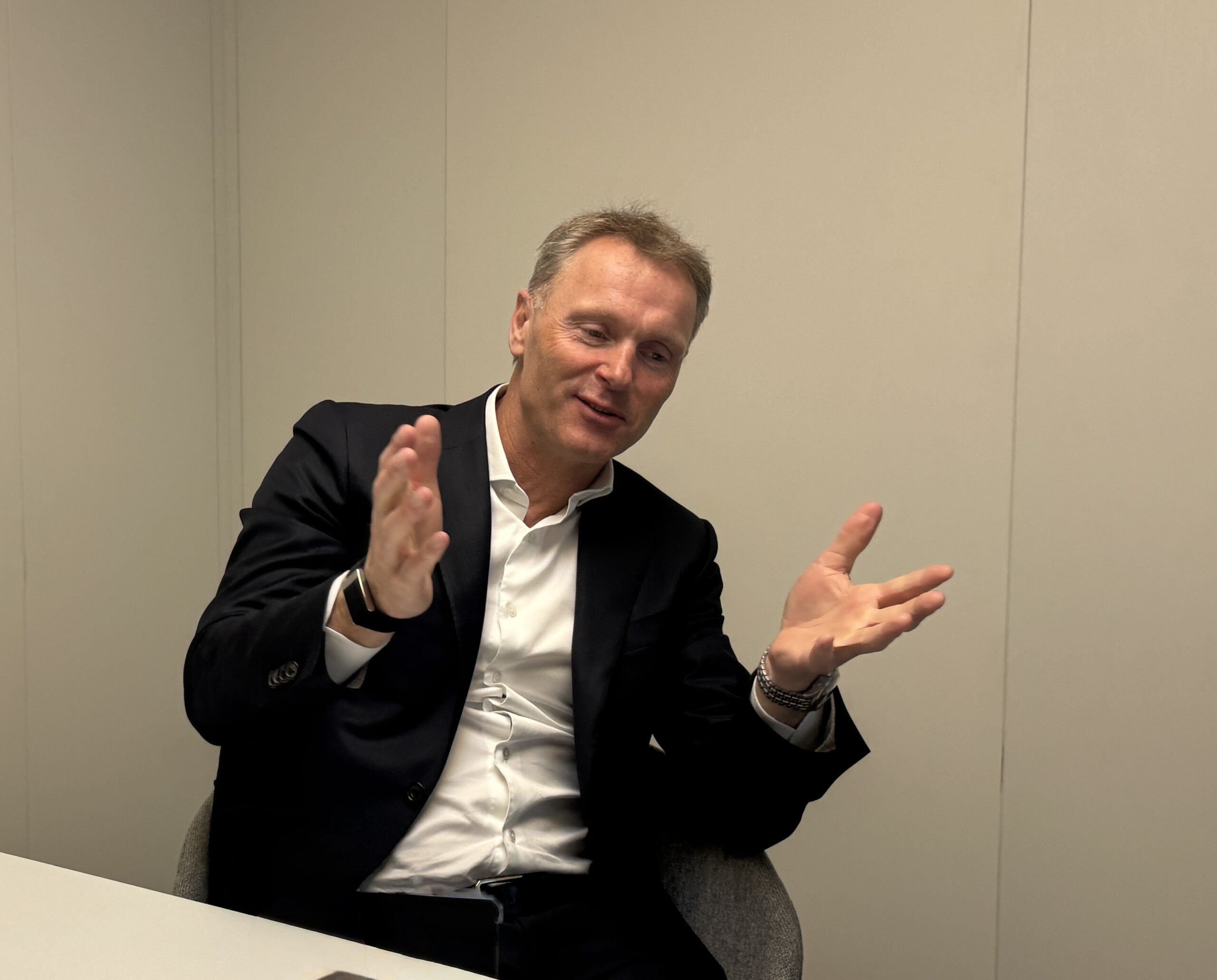
Signify CEO As Tempelman opened the company’s Capital Markets Day with a candid assessment of where the lighting giant stands today.
“It has been five and a half years since our last Capital Markets Day,” Tempelman told investors. “A lot has happened in the last five years.”
What followed was a clear acknowledgment that Signify has not delivered the performance investors expected. “We faced sustained revenue decline over the recent years,” Tempelman said. “Too often have we missed expectations, and for me, the case for change for Signify is crystal clear. We need to stop that decline and do better.”
His solution is what he called a strategy to become “a more focused, better performing lighting company.” Part of that strategy entails fewer countries and significantly fewer skus.
With five different speakers and professionally produced video segments woven throughout the program, the event felt more like a keynote from Cupertino than a traditional lighting industry investor presentation from Eindhoven.
The approach matched the message. Throughout the morning, Signify positioned itself not simply as a lighting manufacturer, but as a company increasingly focused on software, connected systems, data, and intelligent services.
The entire event lasted about four hours, and I listened to several portions multiple times. One aspect I found particularly fascinating was the occasional disconnect between the slides and the spoken presentation.
In some cases, significant information appeared on a slide with little discussion from the stage. In another instance, the opposite occurred: a seemingly routine bullet point on a slide turned out to contain major strategic implications once Tempelman began explaining it.
A Flat Lighting Market
Tempelman does not expect a rising market to solve Signify’s challenges.
The company estimates the global lighting market at approximately €53 billion annually. While connected lighting continues to grow, longer product life cycles and the continued shift to LED technology are limiting overall market expansion. Signify expects the lighting market to remain largely flat during the next three years.
One area where Tempelman challenged conventional thinking involved LED replacement lamps.
“There is a false belief with many that the continuous decline in lamps will continue until the horizontal axis will hit zero,” he said. “We don’t believe that will be the case.”
Instead, Signify expects demand for LED replacement lamps to stabilize as socket-based applications remain in service and replacement cycles mature.
Connected Lighting Drives Future Growth
While the broader market may be flat, Tempelman sees significant opportunity in connected and intelligent lighting systems. “Connected lighting systems are much less mature and approaching inflection points,” he said.
The company estimates that connected lighting currently penetrates only 10% to 15% of the professional installed base and roughly 3% of homes worldwide. Those numbers leave substantial room for growth.
Tempelman also described connected lighting as more than just a lighting opportunity.
“We already capture large amounts of data with our intelligent lighting systems,” he said, explaining how lighting networks are increasingly supporting HVAC systems, traffic management platforms, and other smart-building applications.
Build Businesses and Harvest Businesses
One of the biggest changes unveiled during Capital Markets Day is Signify’s plan to manage its portfolio.
After a detailed review, the company divided its operations into “build” businesses and “harvest” businesses.
“The build businesses are the businesses that we see as really important for our future,” Tempelman said. “That’s where we want to invest our time and our energy and our money.”
Today, those build businesses account for approximately 72% of company revenue. By 2029, Signify expects that figure to reach roughly 80% as growth-oriented businesses become a larger portion of the portfolio.
The company has also identified more than 20 performance areas that will be measured independently.
“We are not changing the company or reorganizing the company,” Tempelman said. “It’s just how we look at the business.”
More Focus, Fewer Countries
Another major initiative involves narrowing Signify’s geographic footprint.
The company currently maintains a direct presence in 55 countries. Under the new strategy, that number will be reduced to approximately 35.
“We want to reduce direct presence from 55 to 35 countries,” Tempelman said. “More focused, simplified portfolio of countries.” He further explained that they will not abandon those countries, but will find other ways to market.
Signify products will still be sold globally, but management plans to concentrate resources in markets with the greatest growth and profitability opportunities.
The company also intends to reduce exposure to commodity manufacturing.
“We are very strong when it comes to sourcing,” Tempelman said. “Why not build those strategic supplier relationships and get less exposure ourselves?”
Playbook #2
Tempelman described three different operating playbooks that Signify will use to manage its portfolio.
The most curious was Playbook #2 — Turnaround, which focuses on EBITA-dilutive businesses.
“There are a few performance areas that do not meet our expectations, and they need targeted interventions,” Tempelman said. “Those are the turnaround playbook. We’ve got to fix those businesses. They’re currently dilutive, and that needs to be turned around.”
What caught my attention was not what Tempelman said, but what appeared on the slide behind him.
While he discussed the turnaround strategy in general terms, the first item listed under Playbook #2 was “Professional: Genlyte Projects.” For a company that often speaks about the strength of its North American brands, seeing Genlyte Projects specifically identified as a turnaround business was noteworthy (more about this tomorrow).
40-50% Fewer SKU’s?
Perhaps the most striking operational target of the morning provided the opposite example.
In this case, the slide itself was easy to overlook. Under a broader supply chain initiative, the presentation simply referenced “SKU rationalization.”
However, Tempelman attached a far more ambitious objective to that brief bullet point.
“Supply chain is really critically important if you want to succeed in the specification project business,” he said. “We need to make sure we end up with the right portfolio, and we are planning to reduce our SKUs, our stock-keeping units, quite significantly — 40 to 50%.”
Your humble editor replayed that portion of the presentation several times to make sure I heard it correctly. That is big news!
Looking Toward 2029
Tempelman closed the first part of his presentation with a straightforward goal: stop the decline.
“We want to return to stable, albeit low growth of the top line,” he said.
By 2029, Signify aims to restore revenue growth and increase adjusted EBITDA to approximately 10%. “I am confident that we can bring the company back to stable revenues,” Tempelman said. For a company that has spent several years managing decline, that may be the most important statement investors heard all day.
The stock declined approximately 14.5%. My take? The market may have overreacted. After listening to the presentation several times, I believe the shares are oversold and have the potential to recover.
Editor’s note: On Thursday, our article will focus on the Professional Lighting Business.
Read the company press release here.