







When business owners begin thinking about succession, the conversation often turns to selling the company. Melissa Deutsch Stein had a different vision.
The CEO of SDA Lighting and Controls isn’t planning to retire, and she isn’t looking for a quick exit. Instead, she wanted to create a structure that rewards employees, preserves the company’s culture, and allows SDA to remain independent for years to come. That vision became reality last week thanks to a 100% Employee Stock Ownership Plan (ESOP), making every eligible employee an owner in the company’s future.
“I’m not going anywhere,” Melissa shared. “This is a way to do a transition and reward the employees for helping build the company. It’s not a quick hit by the owner and out.”
That statement captures the philosophy behind the decision. Rather than maximizing a sale price, Melissa wanted to build a company that would continue thriving long after she eventually steps aside.
Jean Jacques, SDA’s Vice President and COO, said the decision reflects Melissa’s character as much as her business strategy. “Melissa is a special individual. She could have taken a different avenue, but she wanted to do the right thing by her team. That’s true leadership.”
A Vision Fifteen Years in the Making
This wasn’t a sudden decision.
Melissa first became interested in employee ownership while attending business school. Over the past 15 years, she repeatedly returned to the idea, believing it offered the best long-term future for SDA.
Once she decided to move forward, however, the process was anything but simple. Selecting advisors, working with attorneys, completing valuations, and structuring the transaction took nearly a year.
Ironically, one of the biggest challenges was finding advisors who actually wanted to discuss an ESOP.
Saying No to Private Equity
Several firms initially steered Melissa toward private equity instead of employee ownership.
She wasn’t interested.
“I went into these calls saying, ‘I want to do an ESOP,'” she recalled. “They kept pushing private equity.”
Melissa said she left those meetings disappointed because she felt the advisors weren’t listening to what she wanted to accomplish.
Her concern wasn’t simply about ownership. It was about culture.
She believes many financial buyers fail to understand the unique nature of an independent lighting representative agency. While acknowledging that private equity can provide owners with a faster exit and sometimes a higher purchase price, she has watched acquisitions where employees leave, company culture deteriorates, and long-standing customer relationships suffer.
Instead, she contacted a friend whose company had successfully completed an ESOP. That introduction ultimately led her to an advisor who specialized exclusively in employee-owned businesses.
“They were totally ESOP focused,” she said. “I thought they were excellent.”
Ownership Without Buying Stock
Unlike purchasing shares in a public company, SDA employees are not required to invest their own money.
The ESOP becomes an additional retirement benefit alongside the company’s existing 401(k) plan.
As the company’s value grows, so does the value of their ownership interest.
For Melissa, maintaining the 401(k) alongside the ESOP was important because employees are already familiar with that retirement plan. The ESOP becomes another benefit that rewards long-term commitment without replacing existing retirement savings.
A Summer Outing They’ll Never Forget
Keeping the ESOP confidential may have been one of the hardest parts of the entire project.
Only three other people inside SDA knew the announcement was coming. Everyone else thought they were simply attending the company’s annual summer outing.
For years, SDA has made a point of bringing the entire team together each summer. Melissa said the company has hosted everything from baseball games to cooking classes and even “boozy mini golf.” Employees knew another team event was on the calendar, but this year’s invitation was unusually vague.
She instructed everyone to arrive at the office at 9:30 wearing comfortable clothes and comfortable shoes. That was it.
“The guesses started immediately,” Melissa said. “People thought we were going on a boat. Others thought we were headed somewhere else. Everyone kept asking me to tell them what we were doing.”
She never gave in.
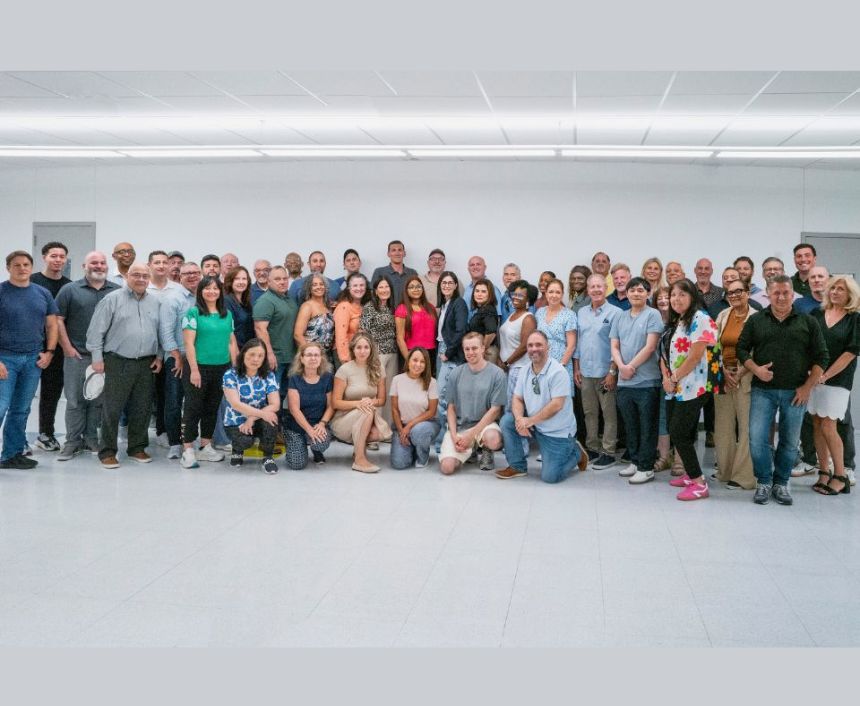
Instead, the entire staff participated in a scavenger hunt which led a few blocks through Long Island City to LaGuardia Community College, where Melissa had rented a meeting room large enough to accommodate the company’s 60 employees. Rather than walking directly into the presentation, employees were greeted with a scavenger hunt that required them to solve clues throughout the building before finding the correct room.

The final step was to press “Play” on a video.
That video revealed the surprise: every eligible employee had just become an owner of SDA Lighting and Controls through the company’s new Employee Stock Ownership Plan.
The room quickly shifted from curiosity to excitement.
Looking back, Melissa admits the hardest part wasn’t organizing the scavenger hunt—it was keeping the secret. Only three members of her leadership team knew about the ESOP before the announcement, allowing one of the biggest moments in the company’s history to remain a complete surprise.
Thinking Like Owners
Melissa said it didn’t take long for employees to embrace the new mindset.
One employee jokingly described the ESOP as “the best golden handcuff you could ever put on me.”
Another emailed a large order with the note, “My first order as an owner…”
Soon afterward, another employee reminded a coworker, “Make sure they know you’re talking to an owner.”
The playful banter reflected something more significant than office humor. Employees had already begun thinking differently about the company’s success because they now shared directly in its future.
A Different Kind of Legacy
Founded in 1962, SDA Lighting and Controls has built a reputation for representing leading manufacturers while providing specification support, project management, and customer service throughout the New York market.
Melissa believes the ESOP strengthens that foundation by aligning the company’s future with the people who build it every day.
For customers and manufacturers, little will change. The leadership team remains in place, the relationships continue, and the company will operate as it always has.
The difference is that every eligible employee now has a personal stake in SDA’s success.
In an industry where succession planning often means consolidation, Melissa chose a different path. Rather than selling the company, she sold the idea of ownership to the people who have helped build it. Judging by the smiles, jokes, and newfound pride around the office, they were happy to buy in—even though it didn’t cost them a dime.