





AJ Gorman Wants Lighting Controls at the Design Table Earlier
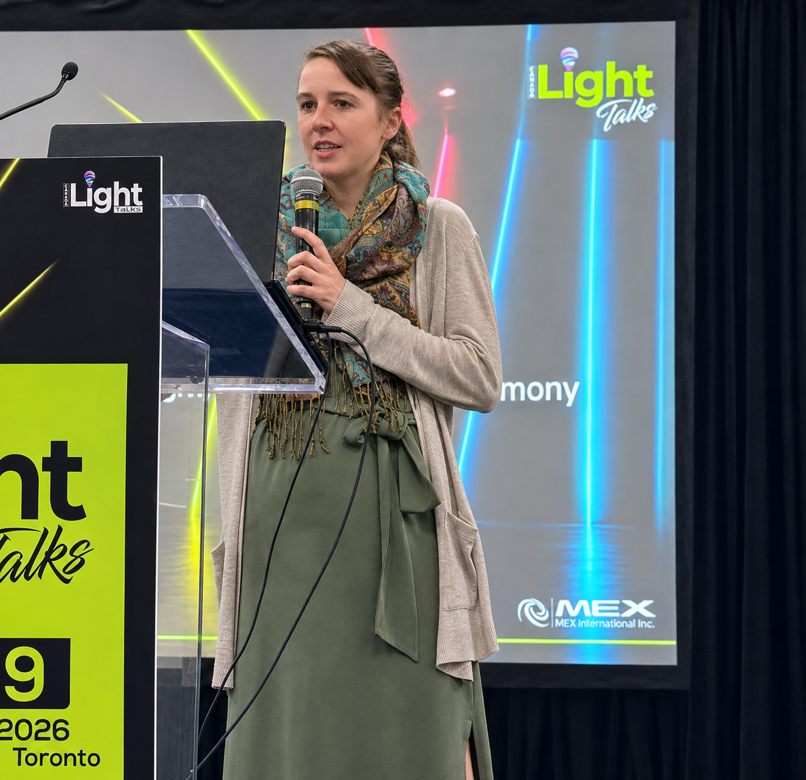
At Canada Light Expo, LightStanza’s director of operations made the case for designing electric light, daylight and controls together. She also asked the industry what it would take to make that workflow practical.
MISSISSAUGA, Ontario — At Canada Light Expo, LightStanza’s AJ Gorman illustrated the cost of putting off lighting controls integration. In her example, the designer specifies 0–10 V drivers for perimeter fixtures. A later daylight analysis calls for two independently dimmed rows, and the team opts for DALI. Now the drivers need to change, and the project may need a change order.
That hypothetical project captured the business problem behind AJ’s presentation, Lighting’s Triple Threat: Electric, Daylight, and Controls. The industry often designs electric lighting first, runs daylight analysis later and leaves controls to another person using another tool. By the time those decisions meet, the fixtures, glazing or budget may already be committed.
Abby Jean (AJ) Gorman, PE, CLD, LC, is director of operations at LightStanza. She earned bachelor’s and master’s degrees in architectural engineering from Penn State and practiced lighting design in Seattle for seven years before joining the software company.
A window decision can become a controls problem
AJ showed two versions of the same building. In one, the architect and lighting designer discuss window size early and budget for automated shading. They can look together at how much daylight enters the space, where glare could occur and how the electric lighting should respond. In the other, large windows are already part of the design when the lighting team gets involved. Occupants complain about glare after move-in, so the owner pays to add shades. If people close those shades and leave them down, the building loses some of the daylight and views the windows were meant to provide.
The same decisions can affect multiple certification goals. AJ pointed to daylight and quality views under LEED and to circadian lighting and glare under WELL. A team pursuing those goals has to consider how a change to the glazing, shades or electric lighting affects the other parts of the design. Dividing the credits among consultants can leave that coordination without a clear owner.
An IES-style file for lighting controls
AJ acknowledged why the handoffs persist. Controls design can fall outside a lighting designer’s fee, and the tools can be difficult to connect. Some software, including LightStanza, already handles both electric lighting and daylight analysis. Adding controls is harder when systems use different protocols and manufacturers supply their own design tools. A specifier may still have to build a separate model or rely on custom scripting to get information from one application into another.
AJ floated an idea familiar to anyone who has imported a luminaire’s photometry. What if controls had a standard file format analogous to an IES photometric file? She envisioned a way to describe both individual components and how they behave as part of a system. Gorman said she had raised the idea with an IES controls committee and invited others to help develop it. The idea is at the discussion stage.
What teams can do on the next job
AJ also looked back on her own work as a designer. She said she could have shared more project context with manufacturer reps, who often see a set of drawings without knowing how the team arrived at those decisions or what might still change. She suggested making time for short project updates and making better use of shared models. A rep who knows the daylight analysis may split a perimeter zone has a chance to flag driver or controls options before the fixture schedule is locked.
Take the lighting controls survey
Would you use a tool that lets you design electric lighting, daylight and controls together? What would it need to do for you to use it on a project? AJ invited lighting professionals to share their feedback and pass the survey along to colleagues.

Scan the survey QR code from AJ’s presentation.