






On May 26, we covered a recent NewsNation broadcast highlighting University College London’s research in an article titled “LED Lighting and Mitochondria: New Research Reveals a Public Health Risk.”
At EdisonReport, our policy is to track the news wherever it leads and to include all sides of major industry discussions when practical. When national media networks broadcast claims that directly affect public perception of solid-state lighting, it is essential that our industry is aware of what is being communicated.
Following the article, we received a clear and detailed response from reader David Miskiel. To keep the discussion balanced and grounded in the underlying research, David identified what he believes are the most significant red flags in the NewsNation report when compared with the actual study.
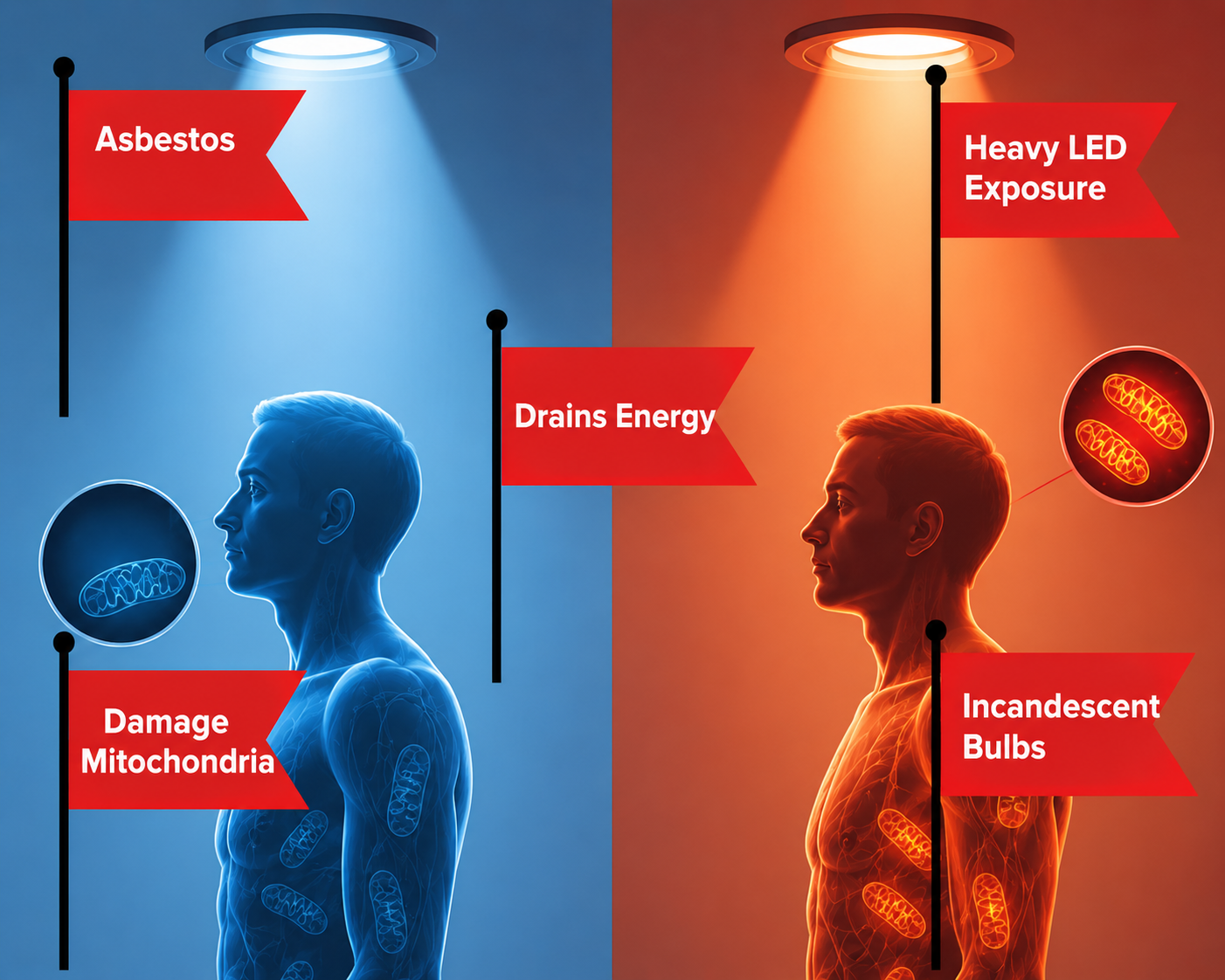
1. “Asbestos-level health crisis” — pure sensationalism
The article quotes a researcher saying this is an “asbestos-level health crisis.” This is not a scientific conclusion — it’s an extreme analogy that no peer-reviewed paper would ever make.
2. Claims that LED light “drains energy”
The article states LEDs may be “draining people’s energy.” The study does not demonstrate this in humans. This is ajournalistic leap, not a scientific finding.
3. Heavy exposure to LEDs “impacts lifespan, blood sugar, mobility”
The article claims LED exposure can affect lifespan, mobility, blood sugar, and oxygen consumption. These effects come fromanimal studies, not human trials. The article blends animal data with human implications without distinction.
4. The article implies LEDs “damage mitochondria”
It says LEDs “undermine mitochondria” and “slow metabolism.” The actual research shows mitochondria respond positively to long-wavelength red/IR light, not that blue LEDs directly damage them.
5. Recommending incandescent bulbs as a “solution”
The article claims incandescent bulbs prevent mitochondrial damage and should be used instead of LEDs . This is not supported by any clinical evidence. It’s also impractical and environmentally contradictory.