








Avi Mor: Great Lighting Design Intent Can Be Lost Long Before the Lights Turn On
CHICAGO — Most lighting professionals know how to create a beautiful design.
The harder challenge is making sure that design survives the journey from concept to occupancy.
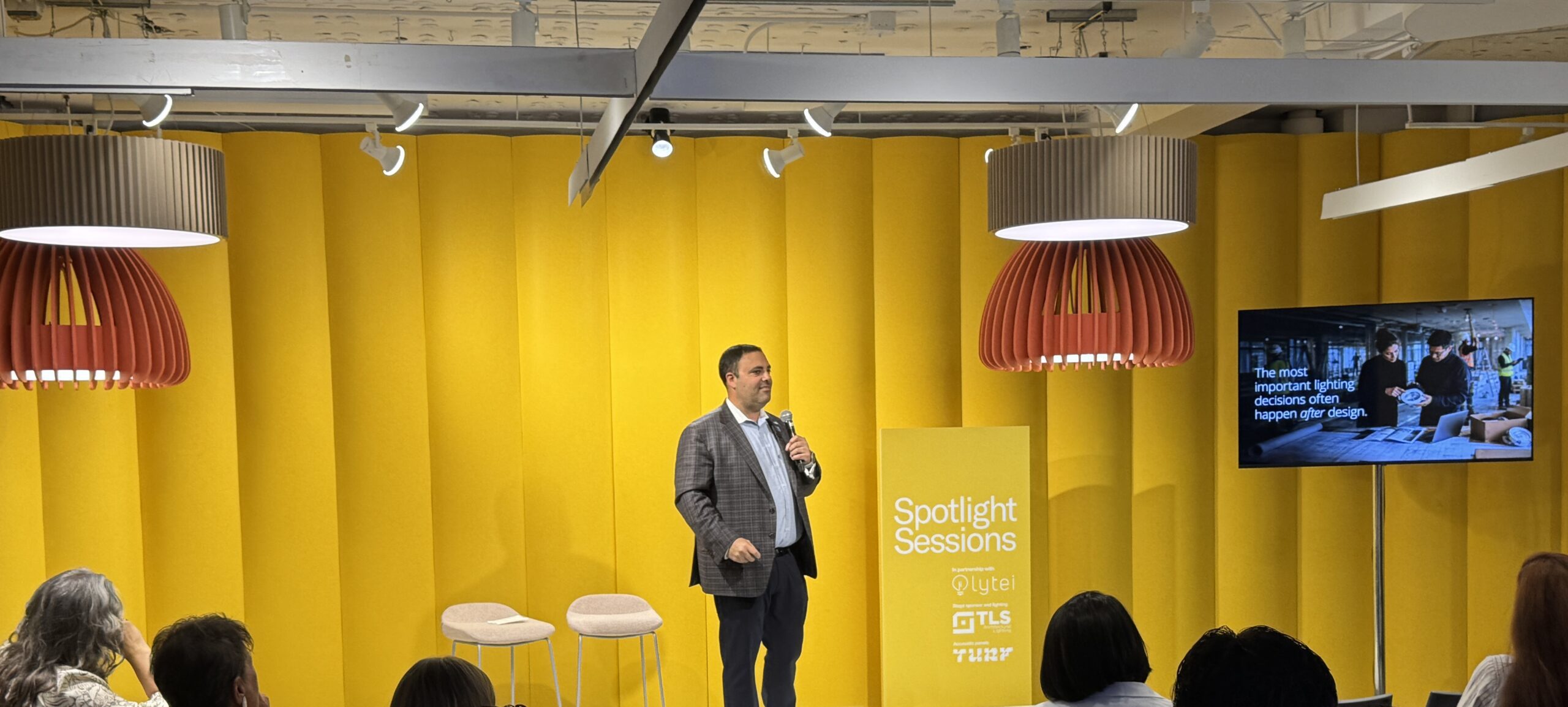
That was the message delivered by Avraham Mor, IALD, CLD, LEED AP, founding principal of Morlights, during his presentation at Illuminate at NeoCon. Avi’s session, “How to Protect Design Intent, Asset Value, and Occupant Experience,” focused on a problem every lighting designer has experienced: projects that look great on paper but drift from the original vision during procurement, value engineering, construction, and maintenance.
“Lighting rarely fails because of bad design,” Avi told attendees. “It fails because of the decisions made after the design is finished.”
The Long Road from Specification to Installation
Avi began by reminding the audience how many people influence a lighting project after the designer completes the specification.
A specification passes through contractors, distributors, rep agencies, manufacturers, architects, interior designers, and owners before fixtures ever arrive on site. Each participant has different priorities, and every handoff creates an opportunity for misunderstanding.
“I say Apple and they hear Maserati,” Avi joked, illustrating how design intent can become distorted as information moves through the construction chain.
Those small misunderstandings often lead to fixture substitutions, control changes, procurement shortcuts, and other decisions that slowly alter the final result.
When “Good Enough” Becomes the Standard
Avi shared examples from real projects to show how seemingly minor decisions can damage the occupant experience.
One example involved the lobby and spa areas of Chicago’s JW Marriott. Years after opening, portions of the property exhibit visible LED flicker and poor dimming performance. The hotel still meets basic lighting requirements. However, Avi argued that the guest experience suffers.
He noted that reception staff frequently report headaches and discomfort when working under the compromised lighting conditions. Yet the installation remains in service because it is considered acceptable.
For Avi, that mindset represents a larger industry problem. Projects often continue operating even when lighting quality has drifted significantly from the original design intent.
Stewardship Doesn’t End at Project Completion
A major theme throughout Avi’s presentation was the need for long-term stewardship.
He described Morlights’ ongoing work with restaurant clients throughout Chicago. Rather than walking away after project completion, the firm continues to help owners maintain lighting systems years later.
When a fixture fails, Avi’s team helps diagnose the problem, order replacement parts, and restore the original appearance. As a result, some restaurants continue operating with their original LED installations more than a decade after opening.
“We have to be stewards,” Avi said. “We have to manage what we’re doing.” That stewardship includes warranty reviews, system updates, maintenance planning, and ongoing communication with owners.
Procurement Matters More Than Many Realize
Avi also challenged attendees to pay closer attention to budgets, procurement practices, and markups. He argued that lighting designers should demand greater transparency during the bidding process and verify that contractors are pricing the products actually specified.
“Don’t just give me a number,” Avi said. “Show me your bill of materials.”
According to Avi, many lighting outcomes change because project teams focus exclusively on first cost while overlooking long-term performance and maintenance considerations.
He encouraged designers and owners to scrutinize substitutions carefully and understand how procurement decisions affect the final experience.
Avi also questioned how LED fixtures are priced and marked up compared to legacy lighting products.
Using the example of a traditional downlight, he noted that older systems typically consisted of three separate components: the housing, lamp, and trim. Each component required handling and coordination throughout the supply chain.
Today’s integrated LED fixtures often combine those functions into a single product. Yet, according to Avi, project teams frequently see higher percentage markups despite fewer components and fewer touchpoints.
“How does that make sense?” Avi asked.
For Avi, the issue is not whether distributors, manufacturers, or contractors should earn a profit. Rather, it is ensuring that project budgets are spent in ways that support lighting quality instead of eroding it.
He believes designers must remain actively involved in procurement decisions because seemingly small changes can dramatically affect the final outcome. “Somebody has to protect the experience, and somebody has to protect the lighting design,” Avi said.
Communication Enhances Lighting Design Intent
Another key lesson involved communication.
Avi shared examples of airports, hospitality projects, and commercial developments where lighting systems changed without the design team even knowing. In some cases, control systems were swapped. In others, fixture packages drifted away from the original specification.
The result was predictable. The completed project no longer reflected the design intent. Avi argued that protecting lighting quality requires active involvement from the entire project team.
Designers must communicate clearly. Owners must stay engaged. Manufacturers and contractors must understand the goals behind the specification.
Without that collaboration, even the best design can be compromised.
Lighting as a Strategic Asset
Avi closed with a broader message for owners and project leaders.
Lighting should not be viewed as a commodity or a line item to be minimized. Instead, it should be treated as a strategic asset that influences occupant comfort, brand perception, and long-term property value.
The presentation aligned perfectly with Illuminate’s goal of elevating the conversation around lighting design.
After all, as Avi reminded the audience, the real challenge is not creating a great design. The real challenge is making sure it survives the many decisions that follow.
Go Deeper: Illuminate at NeoCon 2026: Built for Designers
Day 1: Illuminate at NeoCon Exceeds Expectations
Chicago Reps Walk Illuminate, But Many Remain on the Sidelines