







Illuminate at NeoCon Exceeds Expectations in Debut Year
CHICAGO — When The Mart launched Illuminate at NeoCon, many in the lighting industry wondered whether a lighting-focused event could succeed inside a show known primarily for furniture and commercial interiors.
Based on attendance, exhibitor participation, and early feedback, the answer appears to be yes.
During an interview with EdisonReport, Sohana Arni, founder of line + form + light and a key architect of Illuminate, joined Byron Morton, Vice President of Strategic Growth and Development for The Mart, to discuss the show’s origins, objectives, and early results.
From Idea to Reality
The concept started with a simple conversation.
Sohana, a longtime lighting industry professional, had previously served on NeoCon’s advisory council. Through those relationships, she began discussing opportunities to strengthen lighting’s role within the NeoCon experience.
“Lighting is truly a design element,” Sohana said. “It hasn’t really been encompassed into the NeoCon or interior design conversation the way it should be.”
Initially, she volunteered her time to help shape the concept. However, as planning accelerated, the project demanded more attention. As a result, The Mart brought her on as a contractor to help launch the event.
Today, that effort has grown into one of NeoCon’s most visible new initiatives.
 More Than 60 Exhibitors Participate
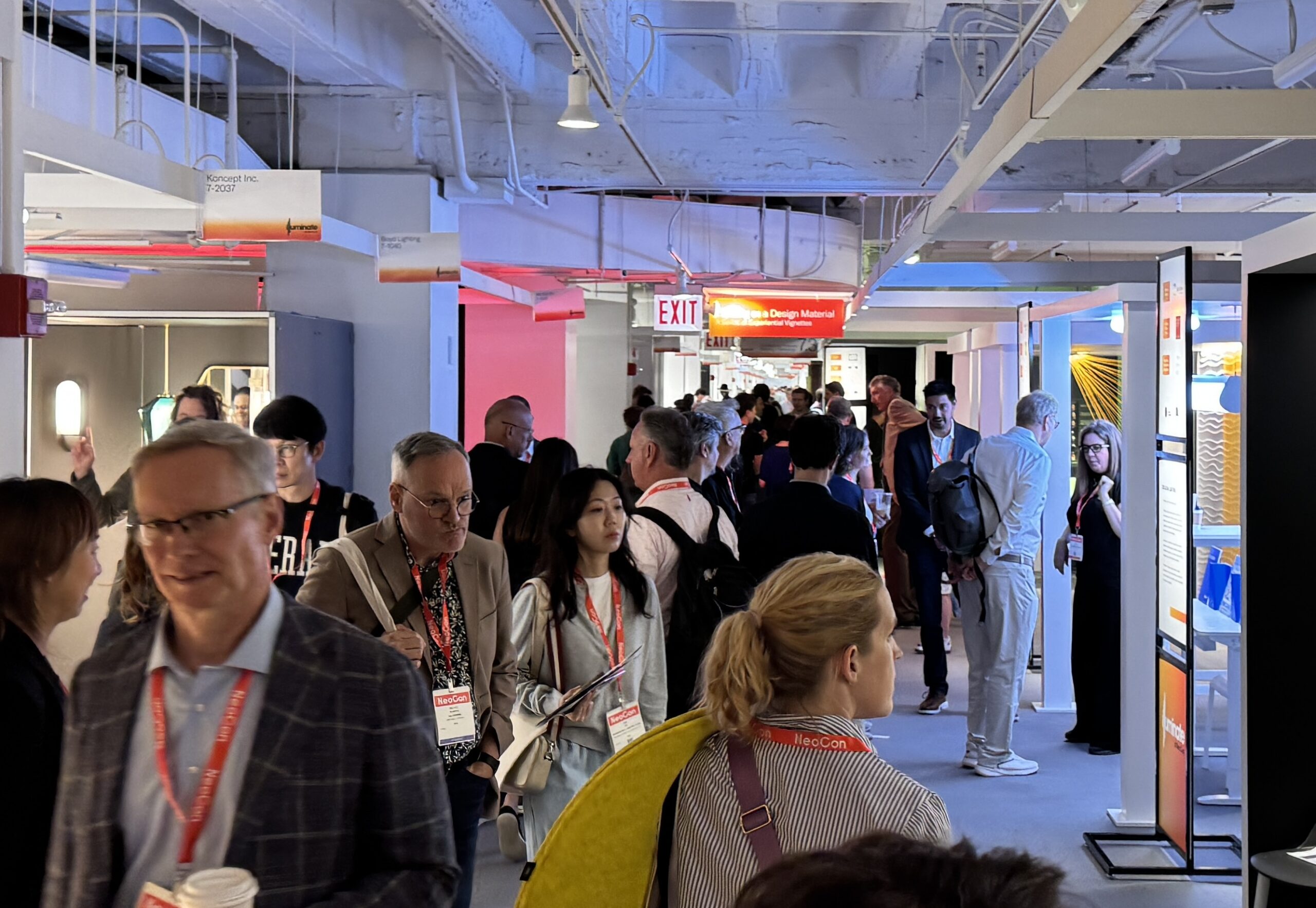
For a first-year event, Illuminate attracted more than 60 exhibitors.
According to Sohana, one key factor was creating an affordable entry point for manufacturers. Booth space was priced at approximately $75 per square foot, and the package included drayage and material handling.
That decision resonated with exhibitors.
Exhibitors often complain that drayage costs are one of the most frustrating expenses at trade shows. By including those services, Illuminate removed a common pain point and simplified budgeting for participating companies.
“We looked closely at successful lighting events and wanted to create something attractive to manufacturers,” Sohana explained.
Reaching a Different Audience
While traditional lighting shows often focus on lighting designers, agents, and manufacturers, Illuminate targets a different audience.
Byron believes that distinction is one of the event’s greatest strengths.
“Lighting is one of the most important elements in a space,” Byron said. “It affects how furniture looks. It affects how people feel. We saw an opportunity to introduce a new audience to the lighting community.”
That audience includes architects and interior designers, who make up roughly 42 percent of NeoCon’s attendees.
Last year, NeoCon welcomed approximately 50,000 attendees and pre-registation is slightly up. Even more encouraging, hotel reservations for this year’s event were running about 10 percent ahead of last year before the show opened.
For Byron, hotel bookings provide a more reliable indicator than registration numbers, since attendees who book rooms have already committed to attending.
Education Takes Center Stage
One of the most distinctive features of Illuminate was its series of educational vignettes.
Rather than relying solely on product displays, the organizers created hands-on experiences designed to teach fundamental lighting concepts.
The exhibits demonstrated topics such as footcandle levels, wall washing, wall grazing, visual comfort, and the impact of light on perception.
Sohana said the idea emerged from conversations with Avraham Mor, architects, interior designers, manufacturers, and other lighting professionals.
The common theme was clear: many design teams still struggle to communicate effectively about lighting. As a result, Illuminate focused on creating experiences that visitors would remember.
“People remember experiences,” Sohana said. “They don’t always remember brochures.”
To support the effort, local lighting designers partnered with manufacturers to develop the exhibits. The response from Chicago’s lighting design community exceeded expectations. According to Sohana, 11 lighting designers volunteered within hours of receiving the initial invitation.
Refreshing the Awards Program
Illuminate also updated its awards program.
The team reviewed existing categories and modernized them to better reflect today’s lighting market.
According to Sohana, some of the previous classifications no longer aligned with current technologies or product categories.
The revised program recognizes products that matter to today’s architectural and commercial lighting professionals while creating room for additional categories in future years.
One of the event’s biggest winners was BIOS Lighting, which earned four honors, including recognition for innovation and technology.
A Strong Start for Illuminate
Perhaps the most significant takeaway came from Byron’s assessment of the event’s business performance.
The floor remained active, the educational content attracted steady traffic, and exhibitors reported meaningful conversations with designers and specifiers.
Looking ahead, both Byron and Sohana see substantial room for growth.
“This is a designer show,” Sohana said, echoing what Avi Mor had told me earlier.
That distinction may ultimately define Illuminate’s future.
Rather than competing directly with traditional lighting trade shows, Illuminate occupies a unique position at the intersection of lighting, architecture, and interior design.
If the first year is any indication, the industry is ready for that conversation.
The Bottom Line
Trade shows succeed when three things happen: the right people attend, exhibitors see value, and organizers create an experience worth repeating.
Byron believes Illuminate delivered on all three.
Based on what your humble editor observed in Chicago on the first full day, it is difficult to argue with that assessment.
For a first-year event, Illuminate did more than launch successfully. It established a foundation for long-term growth.