







ArchLIGHT Summit Education: AI, Controls, and a Reason to Stay Until the End
The ArchLIGHT Summit education program is tackling questions that lighting professionals face every day: Where does AI help? Who makes increasingly complex controls work? And what happens when the industry’s race to the bottom finally reaches its destination?
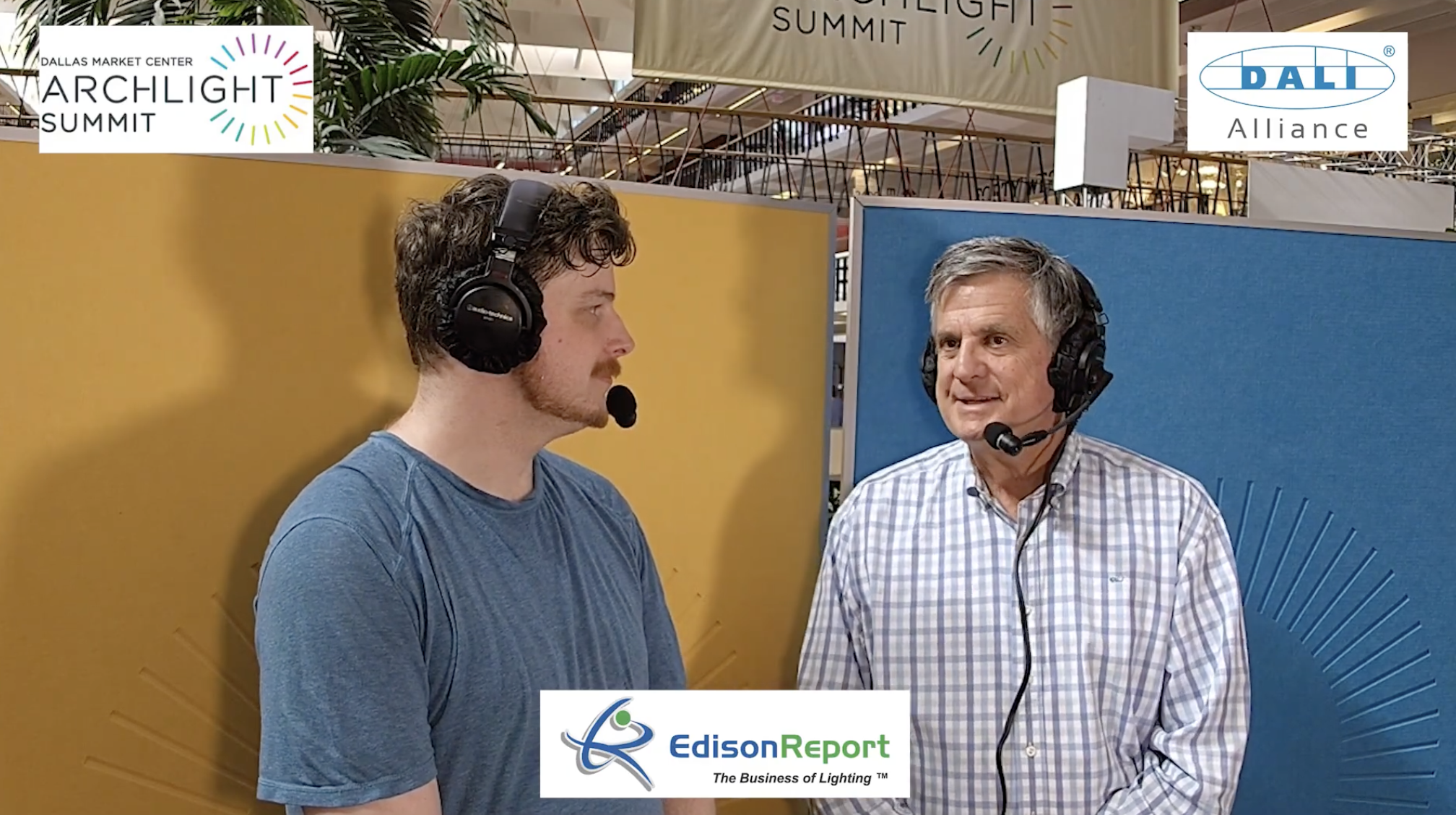
Your humble editor sat down (stood) with C. Webster Marsh, Director of Education and Programming for ArchLIGHT Summit, to discuss the thinking behind this year’s sessions. Our conversation revealed a program built around practical challenges, emerging tools, and the value of thoughtful lighting design.
Webster brings a practitioner’s perspective to the role. At Sladen Feinstein Integrated Lighting Inc., he works as a lighting controls designer, with a position dedicated to specifying and designing controls.
He also serves as Education Manager for the Lighting Controls Academy, formerly the Lighting Controls Association. During our interview, Webster described a major overhaul of its educational content, including videos for much of its self-directed learning through NEMA Academy.
ArchLIGHT Summit Education Takes a Broader View of the Night
Opening keynote speaker Leni Schwendinger is asking attendees to consider urban lighting as a connected experience.
Webster described the problem with treating each building or pathway as an isolated project. A brightly illuminated building may sit beside a dark pedestrian route, with little consideration for how people experience the transition.
Leni’s session, “Humanizing the Night: A Practical Vision for Safer, More Vibrant, Illuminated Cities,” encourages a more holistic approach.
For Webster, the central question is how lighting serves people moving through the urban environment. That requires looking beyond individual installations to consider the nighttime landscape as a whole.
AI Draws the Most Registrations
Ardra Zinkon’s presentation on AI had attracted the most registrations of any session at the time of our interview, according to Webster. That interest comes with a challenge: keeping the presentation current. Webster said Ardra had been updating her slides daily as new developments emerged.
He knew AI needed a place in the ArchLIGHT Summit education program. What impressed him was how specifically Ardra had tailored the material to lighting designers.
“She’s really doing an excellent job of presenting and speaking to the lighting design community specifically,” he said.
Her session, “AI as a Lighting Designer’s Assistant: Practical Tools for Analysis, Comparison, and Clarity,” addresses a subject that is changing quickly while keeping the discussion grounded in professional practice.
Giving Integrators a Voice
Our conversation also turned to DALI outdoor lighting controls and the session “Who Is the Integrator—and Why Your Lighting Project Depends on Them.”
Webster highlighted the participation of Bill Ellis, an integrator whose experience brings a practical perspective to a role that can be difficult to define.
The term “integrator” covers considerable ground. Yet these professionals increasingly play a central role in delivering lighting controls that work as intended.
I noted that during the first two years of designing lighting (dl), we rarely mentioned integrators. Today, they appear in almost every issue.
Webster sees both growing awareness and a profession finding its voice.
“For so long, integrators have been kind of just this person that was in between the cracks,” he said. “Now they’re really front and center for a lot of lighting controls.”
Even so, recognition has not caught up everywhere. Webster said integrator colleagues still encounter trade-show registration forms without an option that describes their work.
Connecting Lighting and Human Health
Mariana Figueiro’s session, “Lighting to Support Human Health and Wellbeing,” is another presentation high on my list.
Webster welcomed the growing body of research informing the discussion. He sees an opportunity to move beyond broad claims and give attendees a stronger understanding of the evidence behind lighting recommendations.
I had spoken with Mariana before the show about her presentation, and our conversation left me eager to hear more. The relationship between light and health deserves careful attention, particularly as designers consider how research translates into everyday applications.
A Closing Keynote Worth Staying For
Andrea Hartranft will close the educational program with “What Happens When the Race to the Bottom Is Over? The Evolution of Value.” Webster said the idea developed through conversations with Andrea, with her driving the central question: What happens if the downward pressure on pricing, fees, and design reaches its logical conclusion?
The setting also provides a natural transition into the closing reception at the Eurofase showroom.
Usually, toward the end of a show, your humble editor is looking for the first flight home. This time, I changed my plans. I am staying because I want to hear what Andrea has to say.
ArchLIGHT Summit made a smart choice in saving such a prominent speaker and timely topic for the closing session, giving attendees a compelling reason to stay until the end.
Webster has assembled more worthwhile sessions than any one attendee can fit into a schedule. That is a good problem to have—and a strong reason to make education a priority while at the show.