






Light pollution has been growing steadily for years, the sky glow over most of the U.S. is measurably brighter than it was a decade ago, and it doesn’t stop at city limits. It disrupts migratory birds and nocturnal animals, disorients sea turtle hatchlings, obscures the night sky for millions of people and wastes energy. Policy is starting to catch up. Across our review of 900 municipal outdoor lighting ordinances, products qualified by the DesignLights Consortium’s LUNA program meet or exceed most of them.
A milestone worth pausing on: Massachusetts, New York, and Washington State have all recently recognized LUNA, recommending LUNA-qualified products for outdoor lighting procurement. We’re thrilled to see these three states building LUNA into the way they buy light fixtures, with LUNA now serving as a compliance pathway for a combined 85 municipalities across those three states. These policies are shaping utility programs too. Illinois just passed a statewide ordinance, The Dark Sky Act, and Ameren Illinois is offering bonus incentives for LUNA-qualified products, on top of standard efficiency rebates.
This is what we’ve been building toward. LED retrofits are accelerating everywhere, and municipalities and utilities are increasingly worried about light pollution. LUNA gives them a way forward: a free, vetted list of quality luminaires that meets ordinance requirements without the guesswork. Because LUNA’s requirements go further than Dark Sky certification by addressing the full picture of energy performance and setting thresholds on uplight and color temperature, it does double duty. States and utilities get less light pollution and lower energy bills from the same qualified product.
State-mandated full-cutoff requirements. Arizona requires full-cutoff outdoor lighting statewide, and its dark-sky culture runs deep. Flagstaff was the world’s first International Dark Sky city, and Tucson has one of the oldest dark-sky ordinances in the country. LUNA works as a compliance pathway for 18 Arizona municipalities for this reason: LUNA’s ≤3000K CCT limit and U-rating system satisfy the state law directly, with amber options covering the tighter observatory-buffer zones around Tucson and Flagstaff.
Technical, BUG-rated municipal codes. East Hampton, New York and Ashland, Oregon both have detailed lighting codes built around BUG ratings and CCT limits, the same framework LUNA already qualifies products against, making compliance easy.
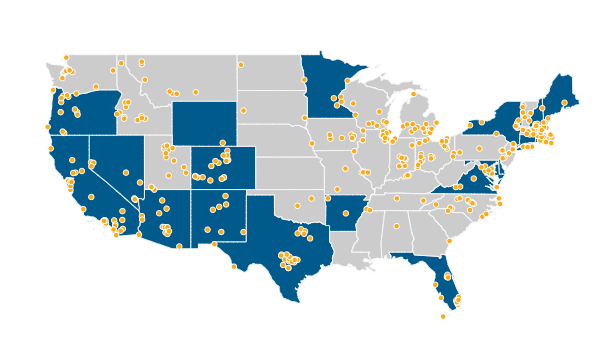
We’ve also made the LUNA Qualified Products List easier to use. Filters now let users search specifically for LUNA, turtle lighting, or amber LED products. Turtle badges flag products that meet LUNA’s new turtle lighting requirements. Product pages now also surface amber LED type, S/P ratio, Hawaii lighting code compliance status, and full photometric, electrical, and color performance data. The goal is simple: put the data decision makers need front and center, so choosing a compliant product is fast rather than a research project.
To keep that momentum going on the manufacturer side, from September 1 through December 31, 2026, the DLC will waive the $50 per child product LUNA fee for new and update applications. (Independent test report fees still apply where required.) With demand building in the states and at the utility level, now is the moment for manufacturers to get their products listed.
Between state adoptions, utility incentives, and a growing evidence base, LUNA is picking up speed and proving that you can have both responsible outdoor lighting and energy savings.
(Tina Halfpenny is Executive Director and CEO of the DesignLights Consortium.)