







Bill Plageman: Why Quality Lighting Still Matters
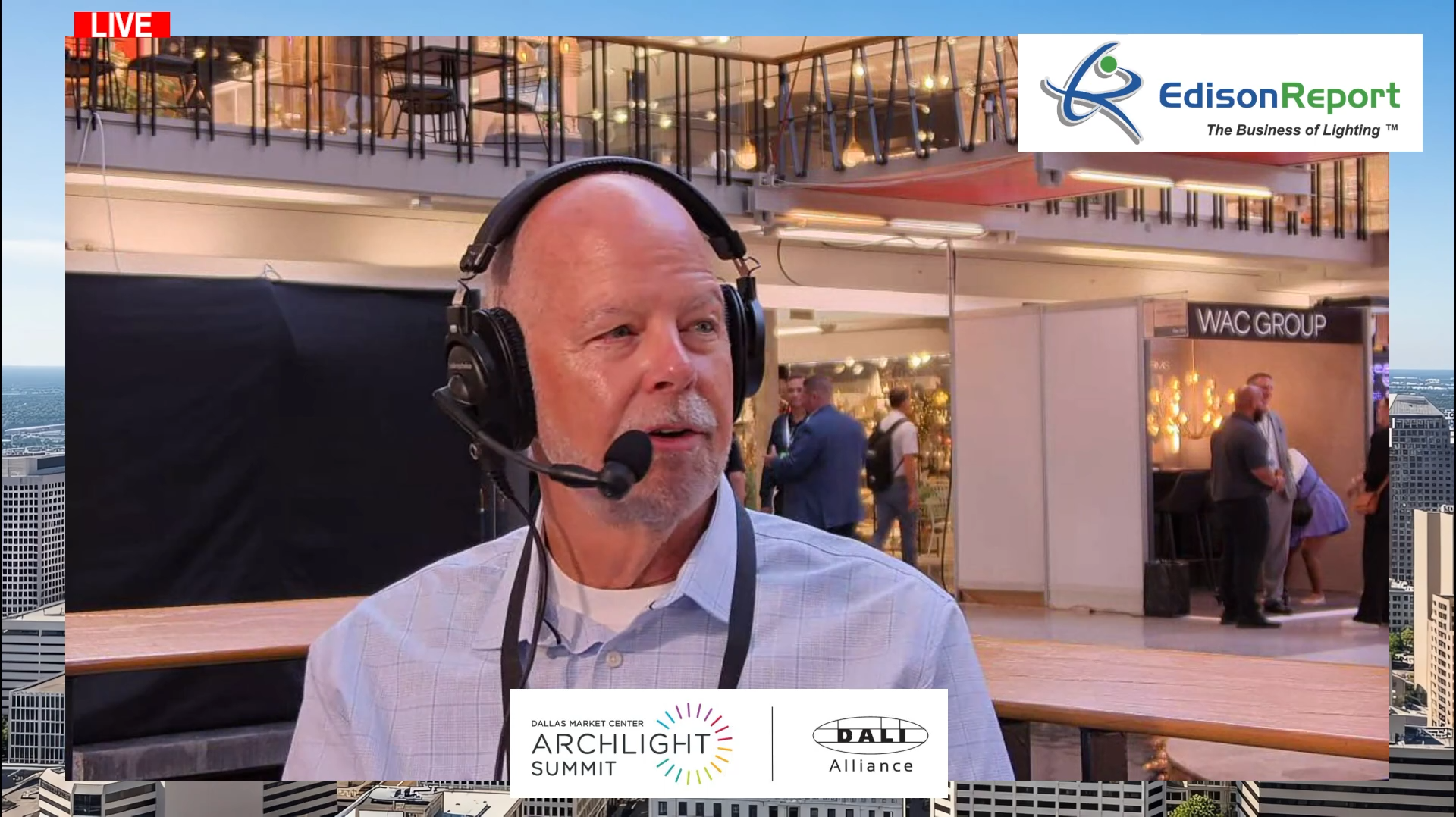
At ArchLIGHT Summit, Amerlux Vice President of Marketing Bill Plageman made the case for quality lighting products, serviceability and long-term performance in a market increasingly driven by lower-cost alternatives.
After nearly 30 years in the lighting industry, Bill Plageman has watched the technology change dramatically. He has seen fluorescent, HID and metal halide give way to LED, while energy efficiency improved, fixture sizes shrank and optical control became more sophisticated.
Through all of those changes, however, Bill has built his career around a consistent idea: designers need to understand what they are specifying. That means looking beyond an image or a cut sheet and paying attention to how a luminaire performs, how it installs, how it manages glare and heat, how long it will last and whether it can be serviced years later.
During our conversation at ArchLIGHT Summit, Bill, Vice President of Marketing at Amerlux, returned to that theme repeatedly.
“An LED is just not an LED,” he said. A fixture is not simply a box with an LED inside. Heat sinks, optics, engineering and construction all influence whether the product will deliver the intended performance over time.
Quality Lighting Is More Than Initial Cost
Before our interview, Bill told me he has become increasingly concerned about the industry’s shift toward lower-cost, lower-quality products. Those products may save money at the beginning of a project, but he believes they can create significantly higher costs later. The problem becomes clear when something fails. A specification sheet or online photograph may show what a product looks like, but it tells very little about whether replacement parts will still exist years later or whether the fixture can be repaired at all.
“Think about buying a product and then having one fail and then trying to either replace it or get parts to fix it,” Bill said.
For him, that is one reason events such as ArchLIGHT Summit remain important. Designers and architects can touch the products, study the optics, look at the construction and ask manufacturers direct questions about serviceability, longevity and performance.
That experience is especially valuable in a market filled with products that can look nearly identical online.
Collaboration Protects Design Intent
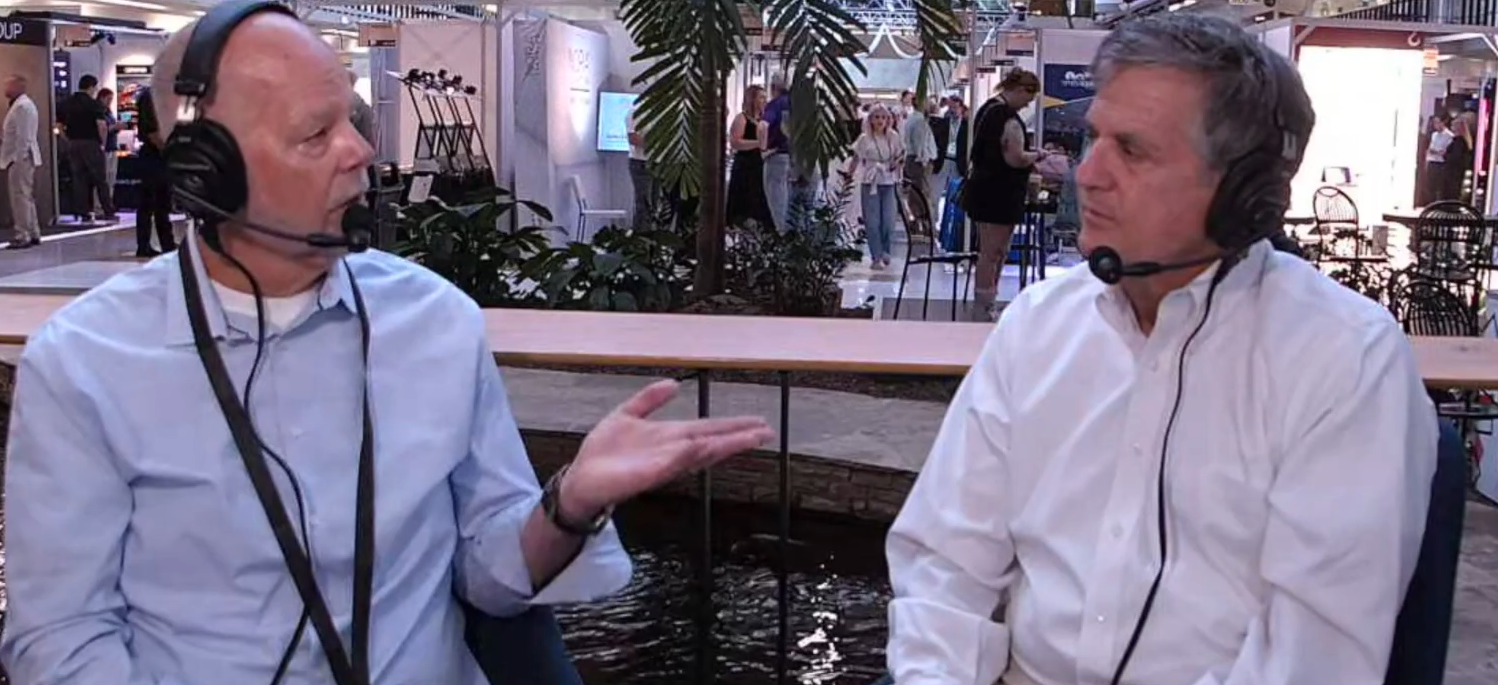
Bill also emphasized the importance of collaboration between manufacturers, designers, architects, agents and owners.
“The design intent never gets to where it should be without a collaboration between a manufacturer and architect or designer and an agent,” he said. That collaboration can be the difference between selecting a fixture that merely meets a schedule and choosing one that actually supports the goals of the project.
Bill believes good lighting design requires more than efficiency. It requires comfort, optical control, low glare and long-term reliability.
Those characteristics can be difficult to evaluate from a website.
What Happens When Early LEDs Reach End of Life?
One of the most interesting parts of our discussion involved Amerlux’s earliest LED installations.
Bill went back to supermarket projects from roughly 2009 through 2012 and found that many of the original track fixtures were still operating. On the surface, that sounds like a strong success story.
But “still on” does not necessarily mean “still performing.”
Bill brought several older fixtures back to the lab and found reduced light output and color shift. The supermarket owners had a predictable response: if the fixtures still work, why replace them?
That question led Amerlux to explore a partnership with FSG around Lighting as a Service.
Under the model Bill described, FSG can replace an aging lighting system without requiring an upfront capital investment from the owner. FSG handles installation, service and maintenance, while the customer pays over time.
For owners, that changes the conversation. Instead of asking why they should replace a fixture that still turns on, they can ask whether that fixture is still delivering the energy savings, output and quality they are paying for.
As the first generation of major LED installations reaches 15 years and beyond, that question will become increasingly important.
Lighting Fixtures Are Becoming Building Infrastructure
Our conversation then moved from longevity into the future of connected buildings.
Amerlux’s Comfort View linear fixture uses multicell optics designed to reduce visible brightness. Bill sees those cells as a potential location for cameras or other sensing technology.
Once those devices are integrated into a luminaire, the lighting system can do much more than control illumination. It can potentially monitor occupancy, daylight conditions, room usage and other data that can inform HVAC or access-control systems.
Bill pointed out that if a system can determine whether a conference room contains two people or 40, the building can respond differently.
That capability becomes more relevant now that Amerlux is part of Delta and has access to a broader controls and building-technology platform.
Still, Bill stressed that technology must match the project’s needs. Not every space needs every possible feature. “There are certain things that everybody needs, and there are certain things that everybody wants,” he said.
Visual Comfort and Quiet Ceilings
Bill also highlighted the Hornet family, including the Hornet 2.5.
New optical systems allow wide beam distributions from very small apertures, which can help designers create cleaner ceilings without giving up useful distribution.
Bill described getting roughly a 50-degree beam from a pinhole-style downlight. The result, he said, is a ceiling that feels more monolithic because the fixtures recede visually.
“You never notice the light,” he said. “You’re just noticing the beauty of the space.”
That statement gets to the heart of his argument about quality lighting. The best fixture is often the one that performs well without drawing attention to itself.
Serviceability Is Becoming More Important
I ended our conversation by asking about repairability.
Bill said Amerlux designs its fixtures to be serviceable, generally from below the ceiling. He also said the company keeps parts available for discontinued products, typically for five to ten years.
That matters because more lighting designers are asking whether a fixture can be repaired rather than discarded when a driver, board or component fails.
The least expensive fixture on bid day may not be the least expensive fixture over the life of the project.
Bill’s larger message was not complicated. The LED revolution gave the industry extraordinary gains in efficiency, longevity and design freedom. The next challenge is making sure those gains are not lost as lighting becomes more commoditized.
For Bill Plageman, quality lighting still comes down to the fundamentals: performance, comfort, serviceability, longevity and relationships with manufacturers that stand behind the product after the project is complete.
Go Deeper: ArchLIGHT Summit Education: Beyond the Show Floor
ArchLIGHT Summit: Strong Start and WILD Welcome
AI for Lighting Designers: Ardra Zinkon Shows What Works
Nighttime Lighting Design: Leni Schwendinger at ArchLIGHT