







A new Penn State research project will examine whether dynamic lighting can help nursing home residents living with dementia sleep better and experience fewer behavioral and psychological symptoms.
Backed by approximately $3.6 million in funding from the National Institutes of Health over five years, the study centers on Smart Environmental Light, or SmartEnLite, a system developed by Penn State researchers Ying-Ling Jao and Julian Wang.
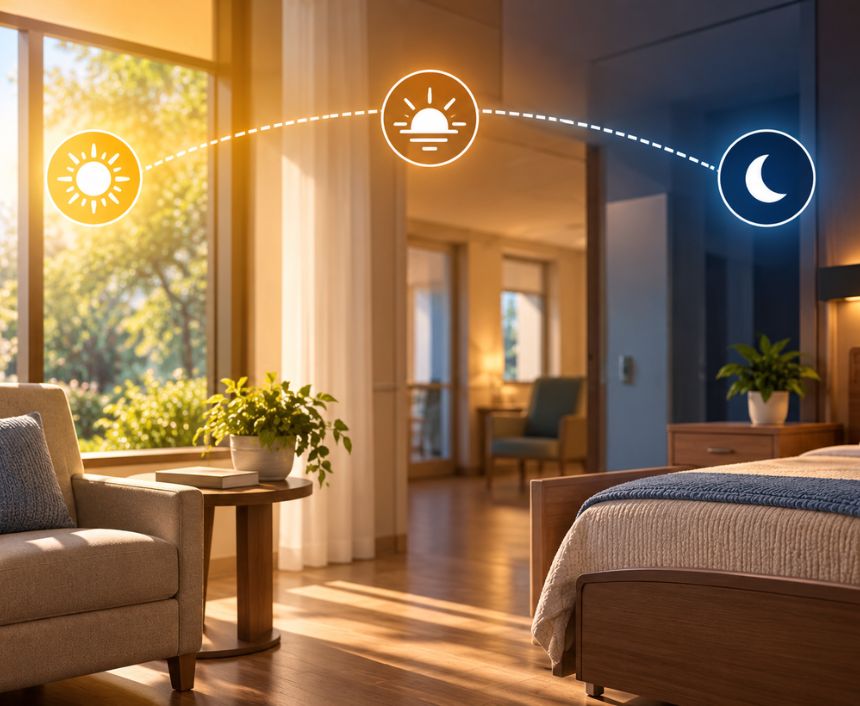
The technology uses tunable LEDs, sensors, and automated controls to change the lighting environment throughout the day. Its goal is to provide stronger circadian stimulation during daytime hours while creating a dimmer environment at night, with the system adapting to available daylight automatically.
The upcoming trial expands on earlier pilot research and is expected to include approximately 300 people with dementia at 10 Pennsylvania nursing homes. Researchers will evaluate changes in sleep along with symptoms such as agitation, depression, and apathy.
Beyond its potential impact on residents, the research could provide useful insight for lighting and long-term care professionals. Findings may help guide future approaches to nursing home lighting, design, and standards for environments serving people with dementia.
The National Institute on Aging-funded project is scheduled to continue through April 2031.
Read the original Penn State article for the full study details.