







The Fork in the Road: When Fixture Manufacturers Bring Controls In-House
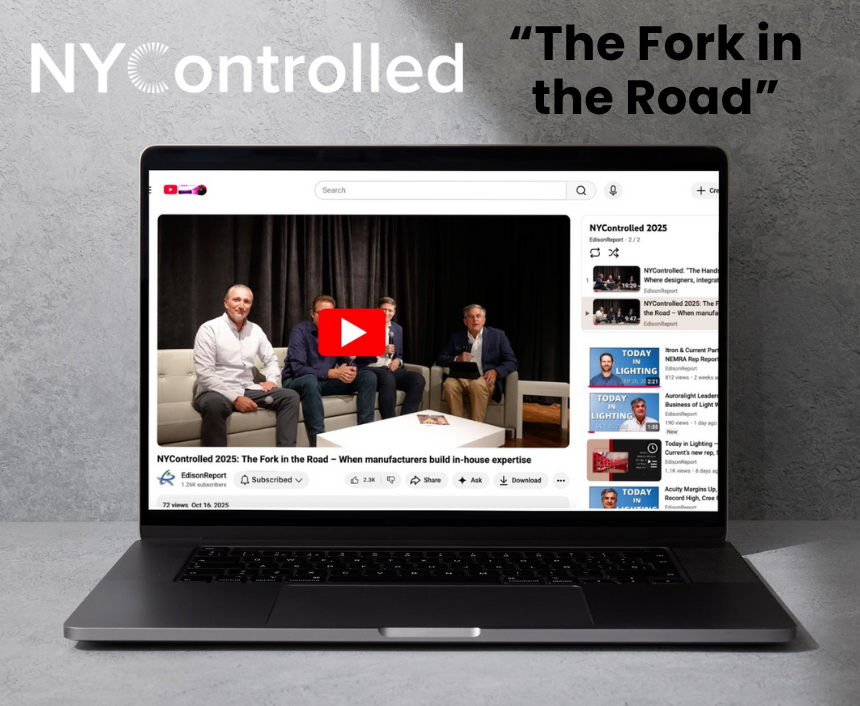
As lighting controls become increasingly integral to fixture performance, manufacturers are rethinking the balance between in-house expertise and external collaboration. I sat down at NYControlled 2025 with Nick Downham (LSI), J.R. Krauza (Coronet), and Metali Ajro (QTL) to explore what drives these decisions, the projects that prompted change, and the opportunities—and risks—of different approaches.
Rising Demand for Controls Expertise
The conversation began with the factors driving deeper controls knowledge within fixture companies. “Schedules now demand a range of dimming protocols, and we need to make sure the power supplies are compatible with all fixture types—tunable white, RGBW, DMX,” said one participant. Codes increasingly require integrated controls, and designers often look to fixture manufacturers for guidance, making in-house expertise essential for immediate, accurate support.
Nick Downham noted, “The market is driving the need. If we’re not ahead of the game, we’re behind.” The ability to address problems directly—without referring clients to third-party vendors—is a key factor in deciding what knowledge to keep internal.
Moments That Sparked Change
For J.R. Krauza at Coronet, the pivot toward controls began nine years ago with the rise of RGBW and DMX systems. “It wasn’t a single project; it was a gradual increase in pressure. Eventually, we had to adapt or be left behind.”
Metali Ajro of QTL cited similar experiences: projects requiring DMX integration highlighted the need for in-house expertise. LSI saw the turning point with the introduction of its control track line, incorporating DMX, 0–10, and DALI protocols—demanding top-tier controls knowledge within the company.
Challenges and Risks
Owning more of the control side comes with responsibility. Customers call the fixture manufacturer first when issues arise, and manufacturers must understand the entire design intent, not just the basic dimming functions. J.R. explained, “We have to understand the control narrative of the designer—PoE, sensors, daylighting. Conversations with designers are now critical to delivering their vision.”
Despite this responsibility, most companies maintain a “controls-agnostic” approach, allowing designers to choose systems while ensuring compatibility and high performance.
The Health of the Controls Industry
Controls adoption has grown steadily, with Wi-Fi, Bluetooth, and advanced power supply integrations becoming more common. Industry experts note that while code compliance has historically driven adoption, today it’s equally about delivering the designer’s intended experience.
Metali emphasized, “We aim to stay ahead of the curve, engaging specifiers and designers to understand their needs. It’s about helping them achieve the best possible design.” J.R. added, “Designers shouldn’t feel they need to learn every detail about controls—that’s why our expertise exists: to help them bring their vision to life.”
Final Thoughts
The discussion highlighted a central message: fixture manufacturers must balance internal expertise with collaboration, always prioritizing the designer’s intent and the end-user experience. As controls continue to evolve, staying proactive, informed, and accessible is key to successful lighting projects.