







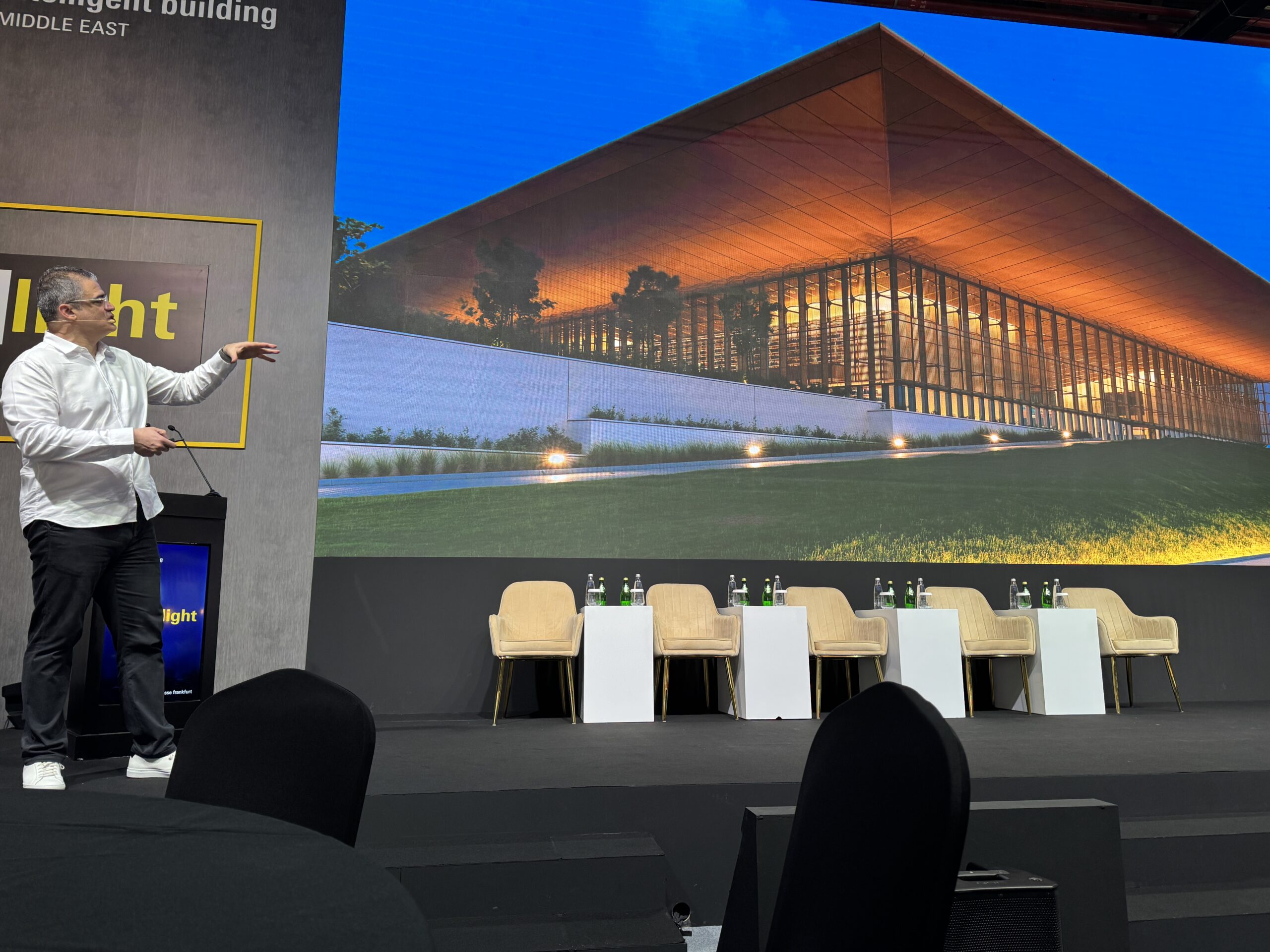
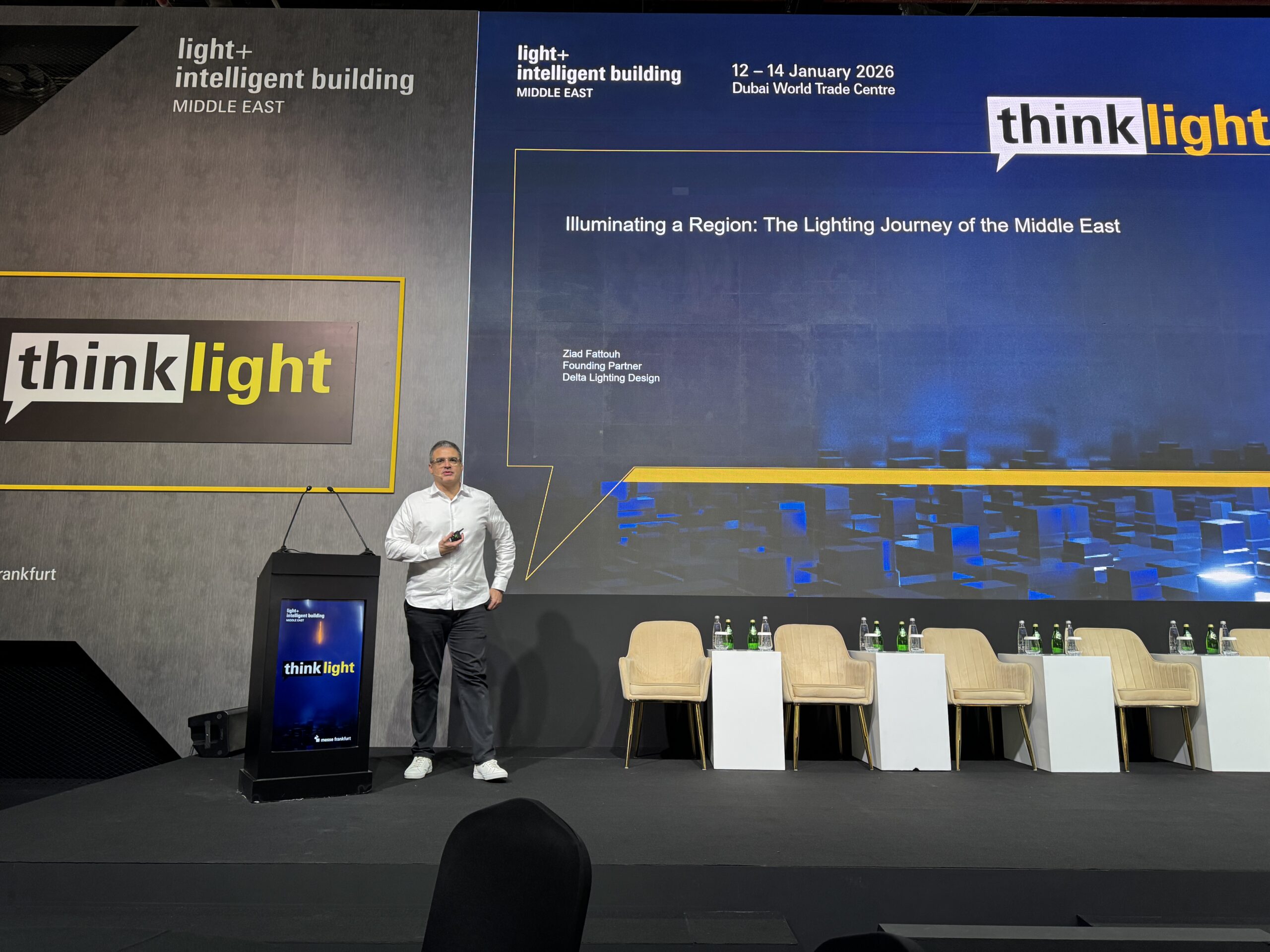
At Light Middle East in Dubai, a compelling session explored how lighting design has evolved alongside the rapid transformation of the Middle East. Delivered by Ziad Fattouh, founding partner of Delta Lighting Design, the talk offered a rare, firsthand perspective on how cities, projects, and professional practices have developed over the past 25 years—and what today’s designers can learn from that history.
Ziad’s career has unfolded in parallel with Dubai’s rise. When he arrived in the late 1990s, the city’s lighting design community was small, with only a handful of firms operating in the region. Today, Dubai and the broader Middle East host hundreds of lighting practices competing on projects of unprecedented scale and ambition. His presentation traced that evolution through built work, hard-earned lessons, and a clear-eyed assessment of where the market is headed.
From Modest Beginnings to Global Benchmarks
Early projects in Dubai were modest—private villas, gyms, wellness centers, and small commercial spaces. While limited in scale, these projects established a foundation of discipline. They taught how lighting supports comfort, influences daily life, and shapes visual identity. Over time, those lessons informed larger commissions, including retail projects that revealed how lighting affects movement, attention, and consumer behavior.
As Ziad noted, lighting designers often underestimate the value they bring. Lighting can define a project’s commercial success, yet its financial impact is difficult to quantify. Iconic buildings may be celebrated for their architecture, but their emotional resonance and nighttime identity are frequently driven by lighting—an influence that rarely receives proportional recognition.
Hospitality, Storytelling, and the Power of Narrative
Restaurants became Delta Lighting Design’s gateway into hospitality, eventually leading to luxury hotels and large-scale resorts. With each step up in scale, storytelling became more critical. Lighting was no longer just functional or decorative; it became an essential part of a project’s narrative.
In ultra-luxury environments, every detail matters. Designers must work with exacting architects, interior designers, operators, and developers, all while balancing aesthetics, sustainability, budgets, and performance requirements. The challenge lies in delivering intimacy and craftsmanship at mega-project scale—a hallmark of the UAE construction market.
When Lighting Shapes Architecture: The House of Wisdom
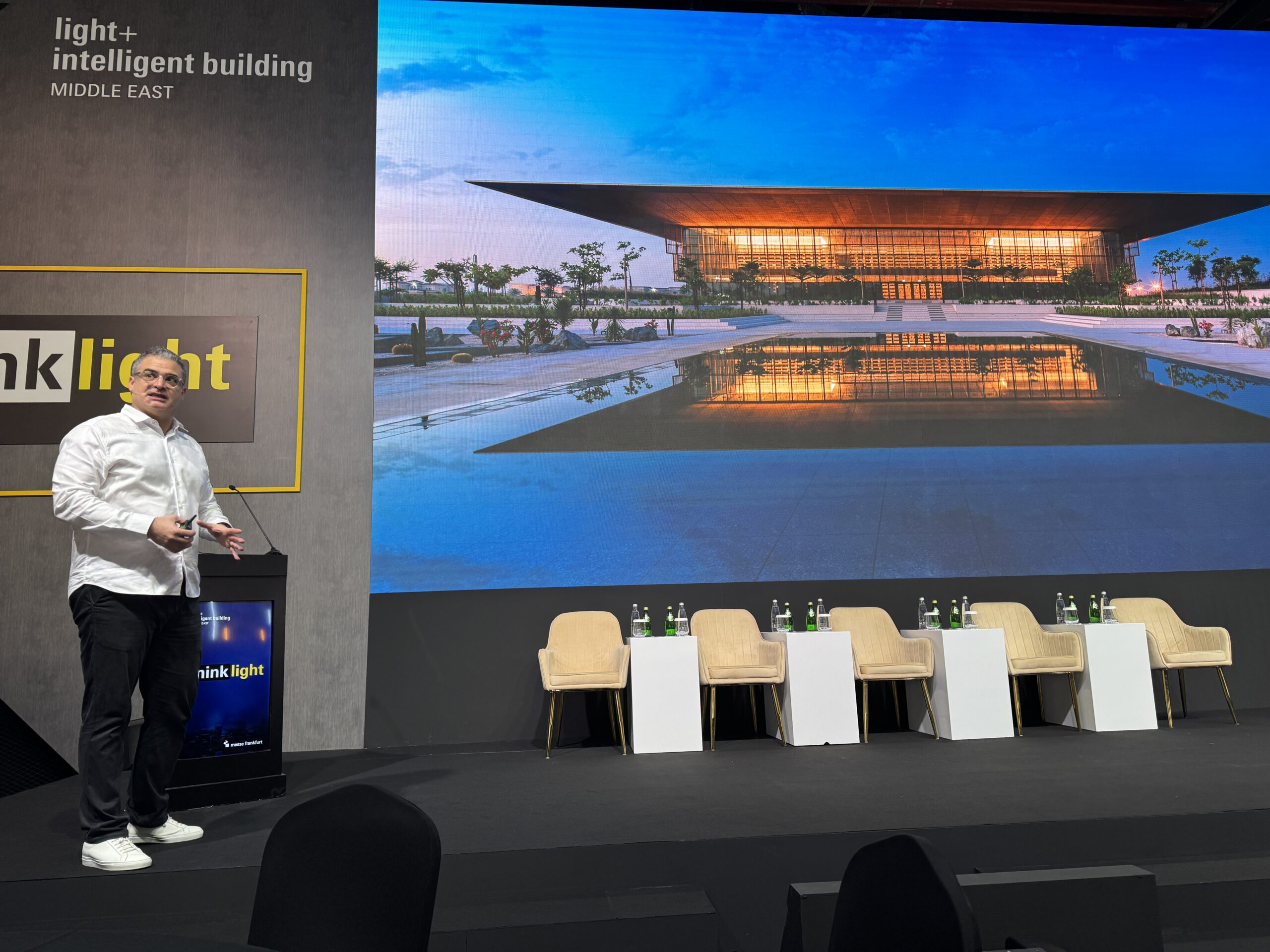
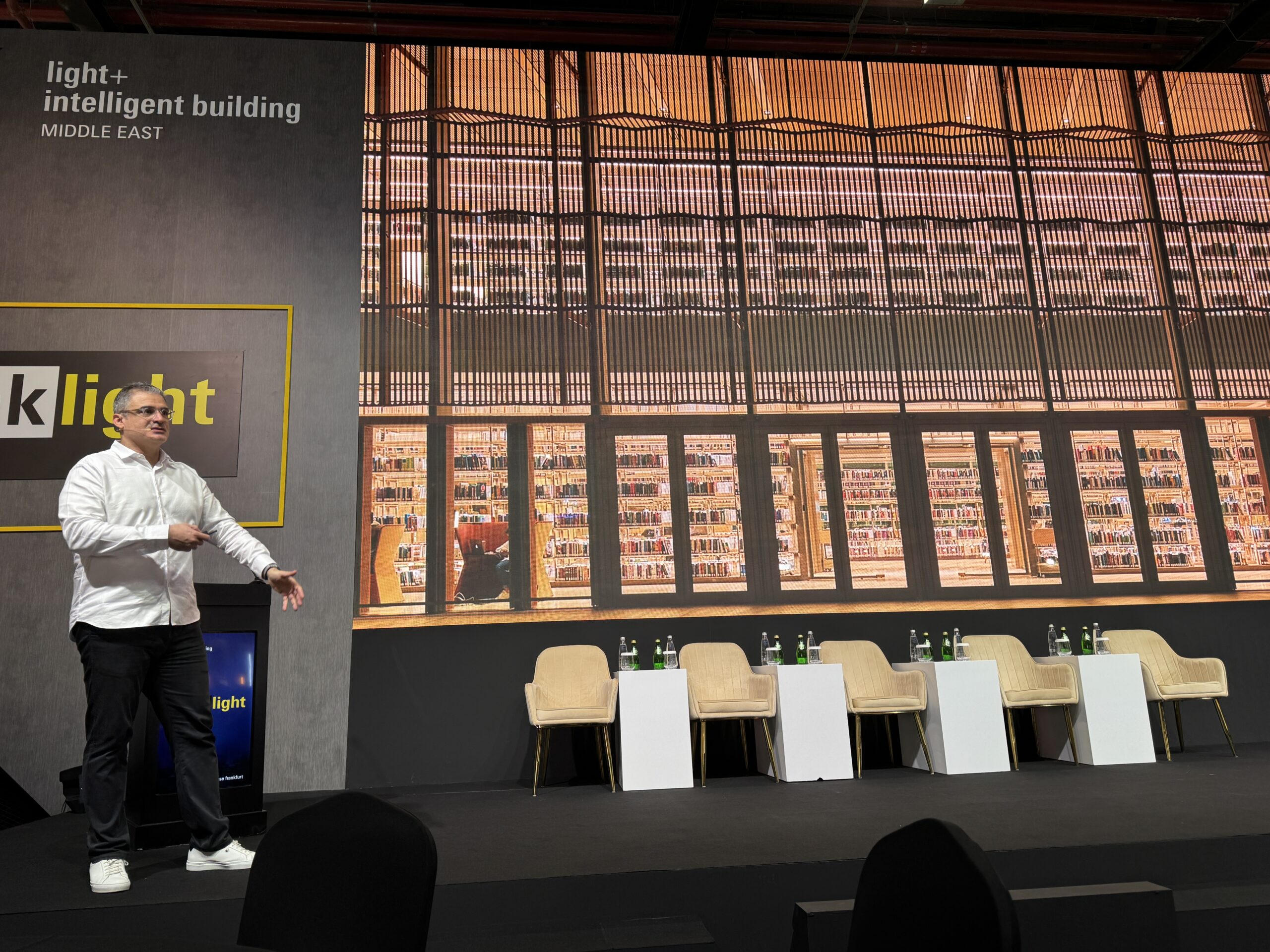
One of the most powerful examples shared was the House of Wisdom in Sharjah, designed with Foster + Partners. Rather than beginning with fixtures or light levels, the team started with a question: What should this building represent?
Inspired by the historic House of Wisdom in Baghdad and its role as a beacon of knowledge, the lighting concept centered on glow rather than illumination. Instead of highlighting the building’s dramatic canopy and façade screens, the design focused inward—illuminating bookshelves and interior spaces so the building would read as a lantern at night. This approach influenced material choices, façade treatment, and architectural decisions, demonstrating how lighting can actively shape design outcomes rather than simply respond to them.
Mega Projects, National Vision, and Hard Realities
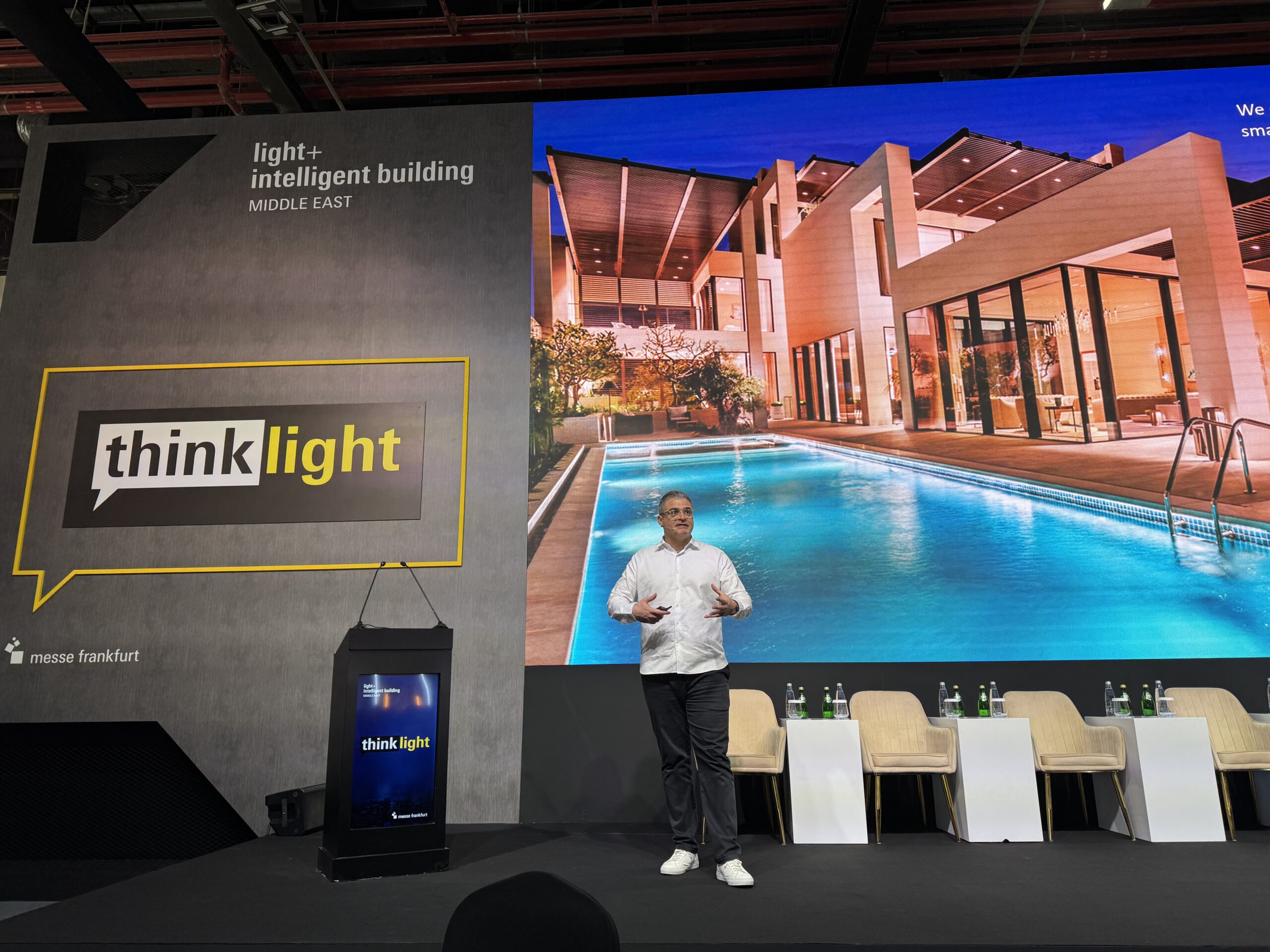
As projects grew larger, lighting designers became part of vast mixed-use developments and national initiatives, particularly in Saudi Arabia. These projects are not just real estate ventures. They are statements of ambition intended to position cities and countries on the global stage.
However, Ziad offered a note of caution. Not every ambitious concept will be built, and not every iconic project will be profitable. Scale increases complexity, timelines stretch, and margins for error shrink. Designers must be realistic about manpower, schedules, and fees, resisting the temptation to underestimate resources or overcommit to spectacle.
“All that glitters is not growth,” he warned, emphasizing the importance of practicality, especially as markets mature and shift toward more repeatable, financially viable developments.
Controlling Cost and Designing for Longevity
A key takeaway from the session was the importance of controlling capital expenditure. While landmark projects play a role in branding and visibility, sustainable practices depend on delivering projects that allow clients to succeed financially. Designers who understand their clients’ business models—and design accordingly—are more likely to build lasting partnerships.
Dubai’s hospitality market illustrates this shift. While ultra-luxury hotels capture attention, they represent a small fraction of total development. Mid-scale and upper-upscale projects now dominate, offering greater opportunity for consistent, profitable design work.
Looking Forward
Ziad’s talk was not just a retrospective; it was a call for reflection. The Middle East continues to offer unmatched opportunity, but progress depends on learning from past successes and missteps. Lighting designers must balance ambition with responsibility, creativity with discipline, and spectacle with substance.
For those in attendance at Light Middle East, the session served as both inspiration and reality check—a reminder that lighting design, when done thoughtfully, does more than illuminate buildings. It helps define cities, shape culture, and tell the story of a region in transformation.
Go Deeper:
A First Look at the Short List: Light Middle East Awards Finalists