







CHICAGO — One of the most memorable exhibits at Illuminate at NeoCon did not focus on a new luminaire, control system, or lighting technology. Instead, it explored the powerful relationship between art, light, and the human brain.
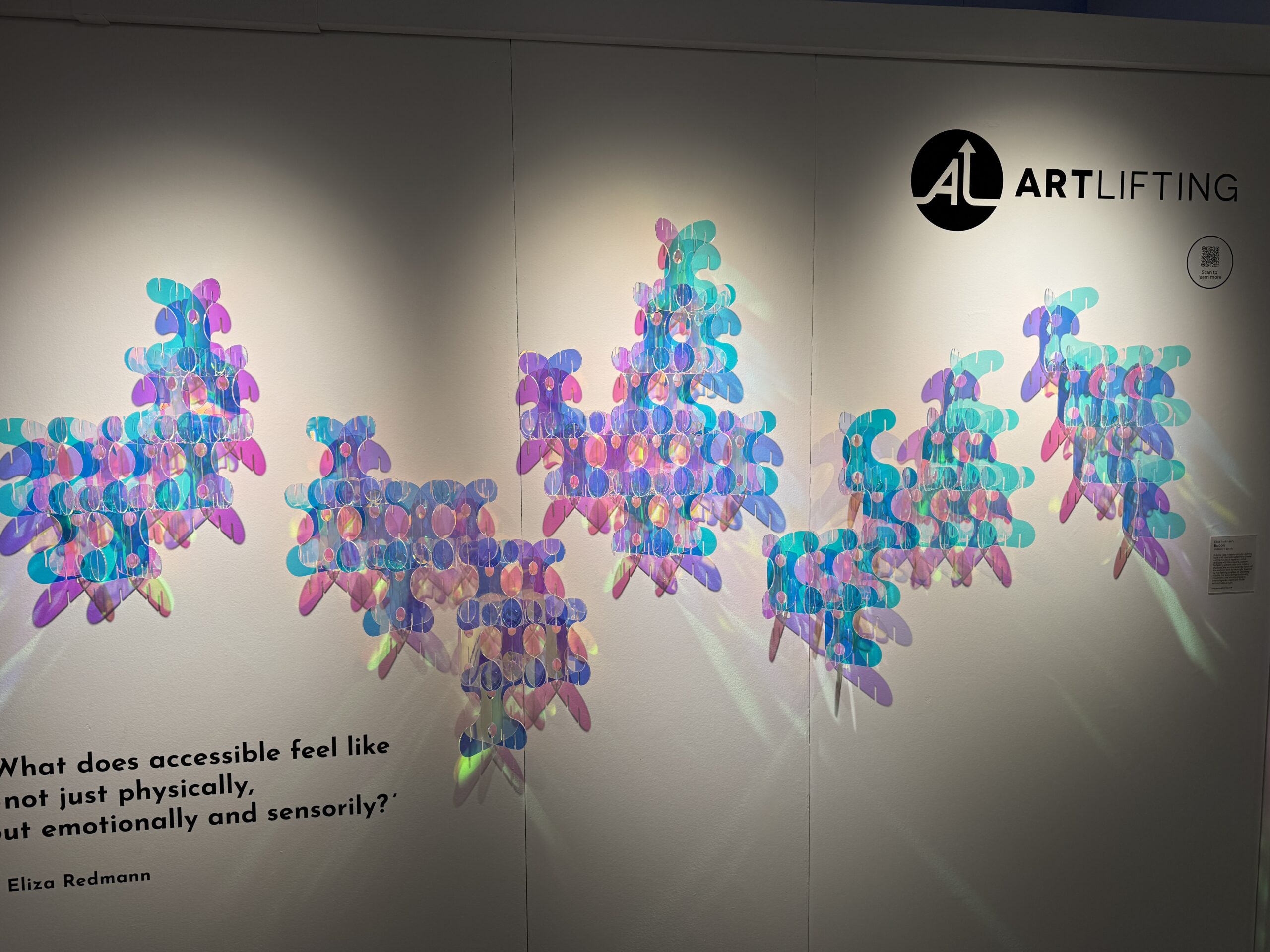
The exhibit, called ArtLifting, invited visitors on what organizers described as a neuroaesthetic journey. Created in partnership with Morlights and Lighting Services Inc, the installation demonstrated how thoughtfully illuminated artwork can influence emotions, spark creativity, and encourage human connection.
As attendees moved through the space, they encountered sculptural works by featured artist Eliza Redmann. The artwork, combined with carefully crafted museum-quality lighting, created an experience that challenged visitors to think differently about both art and lighting.
The Science Behind the Experience
The concept behind the exhibit is rooted in neuroaesthetics, a growing field that studies how art affects the brain, and a field that your humble editor had never heard of.
Research suggests that exposure to art can reduce stress, lower cortisol levels, and stimulate creativity and innovation. Art can also create environments that encourage collaboration and help people see problems from new perspectives. This makes sense to me, as when I find myself in a strange city with time on my hands, I gravitate toward the nearest museum.
According to the exhibit team, those benefits become even more meaningful when viewers engage with artwork created by artists whose life experiences differ from their own.
The exhibit encouraged visitors to slow down, observe, and experience the emotional and cognitive effects of art illuminated with precision and intention.
From Architect to Artist
Eliza’s story is central to the ArtLifting experience.
Originally trained as an architect, she suffered a traumatic brain injury following a serious automobile accident. The injury altered her vision, affected her ability to sustain focus, and changed her vestibular system, making it difficult to work for extended periods on a computer.
Unable to continue practicing architecture in the traditional way, she turned to art.
Today, Eliza creates intricate modular sculptures that move between sketching, digital modeling, and hands-on fabrication. The process allows her to work directly with materials while expressing the visual experiences that emerged after her injury.
Her artwork explores patterns, forms, and visual relationships that challenge perception. The pieces often appear familiar at first glance, yet reveal increasing complexity the longer viewers engage with them.
The result is artwork that invites curiosity rather than providing immediate answers.
Video Credit: Andrew Caminiti | Digital Media Producer, Your Lighting Brand
Lighting as Part of the Art
To bring the exhibit to life, ArtLifting partnered with Avraham Mor, IALD, CLD, founder of Morlights.
Avi is widely known for his museum lighting expertise and has worked on projects throughout the country, including installations at Chicago’s Field Museum. Lighting Services Inc supplied the luminaires used throughout the exhibit.
The lighting was designed to reveal texture, depth, shadow, and dimensionality within Redmann’s sculptural pieces. Rather than serving as a backdrop, the lighting became an active participant in the visitor experience. The installation demonstrated a principle well understood by museum lighting designers: light does far more than illuminate artwork. It influences how viewers perceive, interpret, and emotionally connect with what they see.
A Business Model That Supports Artists
While the exhibit focused on art and neuroscience, it also highlighted a successful commercial model.
Founded in 2013, ArtLifting connects artists with disabilities and veterans to corporations, healthcare organizations, universities, hospitality projects, and public spaces seeking original artwork.
The company handles sales, licensing, marketing, production, and installation while ensuring that artists share directly in the revenue. Today, ArtLifting artwork can be found in offices and facilities operated by major organizations, including Google, Microsoft, Bank of America, Amazon, and many healthcare and educational institutions.
For buyers, the artwork delivers more than visual appeal. It also supports artists whose perspectives are often underrepresented in the marketplace. For the artists, the model creates meaningful economic opportunities and sustainable professional careers.
Go Deeper: The Monza Method Turns 20
At NeoCon, Manufacturers Come to Meet More Than Designers