







Circular Lighting: Signify Makes the Business Case for Keeping What Works
Circular lighting offers a business opportunity that reaches beyond sustainability. In a conversation with your humble editor Mario Giordano, Global Head of Public & Government Affairs at Signify, explained how repair, upgrades, and longer customer relationships can preserve value while improving lighting performance.
For Mario, the starting point is customer demand. More customers want circular solutions, he said, and Signify sees an opportunity to help them get more from infrastructure they already own. However, turning that interest into projects requires careful assessment, practical services, and a broader view of cost.
What the Oxford Analysis Tells Us
The conversation followed an analysis conducted by the University of Oxford’s Circular Economy and Sustainability Lab and Academics for Circular Economy, with support from Signify. Researchers examined 50 lighting projects across 10 sectors.
As EdisonReport reported on 26 October, 37 projects, or 74%, reported capital, maintenance, or financing benefits. The analysis also identified extended asset life in 31 projects and reduced downtime or disruption in 23.
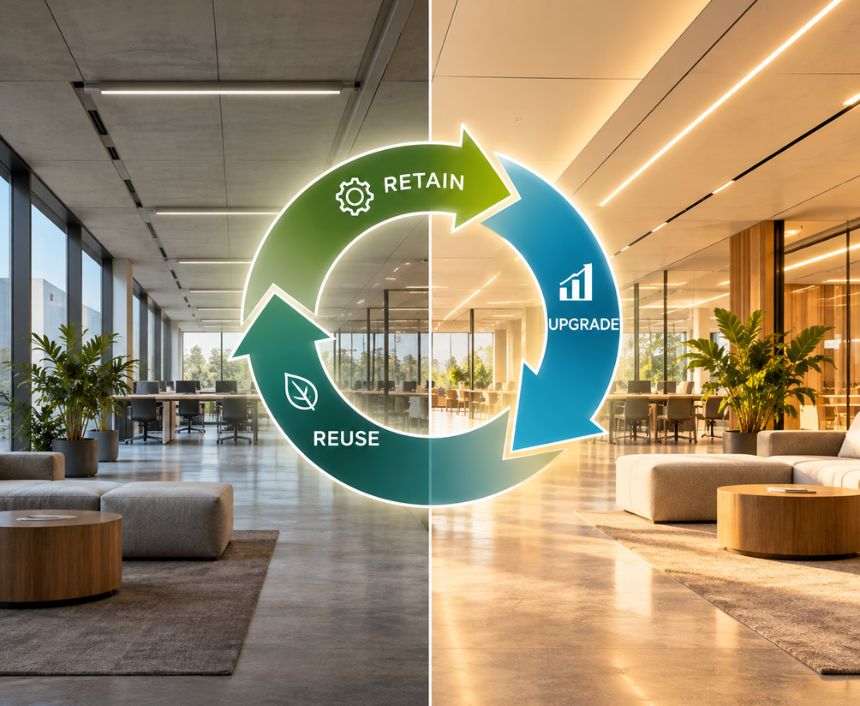
I asked Mario to clarify the comparison behind those findings. He explained that the researchers compared circular approaches with the alternative of full replacement. The question was how retaining and upgrading existing assets changed the outcome.
The findings describe benefits reported across the projects studied; they do not promise the same savings on every installation. Instead, they give owners and specifiers reasons to evaluate what can remain before deciding what must go.
Circular Lighting Starts with an Assessment
One of my questions concerned installation time. Anyone who has worked around lighting knows that changing an entire fixture usually takes less time than replacing its driver, LED board, and optics.
Mario agreed. “There is not a one-size-fits-all approach to this,” he said.
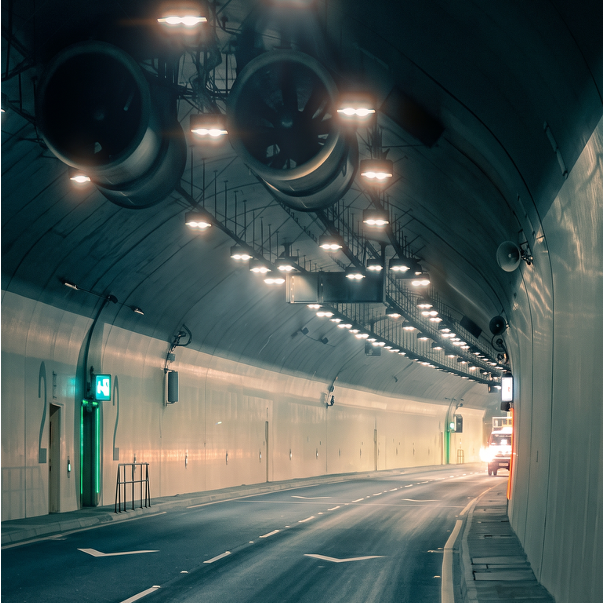
Consequently, an audit becomes central to the process. A school may offer an extended summer window for renovation. A hospital, tunnel, or industrial facility may require a plan that keeps operations running throughout the work.
Mario also described a staged approach within a facility. Crews can remove luminaires, refurbish them, and install them elsewhere while work proceeds in parallel. The refurbished fixture does not necessarily return to its original location.
For contractors and owners, the takeaway is practical: evaluate the entire job. The time spent working on one luminaire tells only part of the story when access, scheduling, and operational continuity also affect cost.
A Business Built on Longer Relationships
I also asked the obvious business question. Why would a company that sells luminaires encourage customers to retain them?
Mario placed that question in the context of Signify’s evolution. The company’s history includes lamps and ballasts, followed by the shift to LED retrofits and integrated LED luminaires. Now, he sees another opportunity in helping customers maintain and upgrade their installations.
Those services can extend the commercial relationship beyond the initial sale. In his view, repairability and upgrades create value for customers while giving Signify an ongoing role in the performance of their lighting.
However, Mario cautioned against expecting a return to the old replacement market. I recalled the days when distributors stocked interchangeable lamps and ballasts from multiple manufacturers. He explained that today’s luminaire designs differ too much to simply recreate that model.
Instead, he emphasized maintaining or improving light quality, efficiency, and safety while reusing suitable components and materials.
What Circular Lighting Brings to Customers
Signify Circle provides a framework for that approach. Mario described the program as part of Signify’s broader Brighter Lives, Better World sustainability effort, with Europe as the starting market.
The program classifies products according to circular characteristics, including their potential for repair, upgrades, and remanufacturing. Customers can then connect those product capabilities with appropriate services.
“Circularity comes from our customer,” Mario said.
That customer focus helps explain the commercial logic. A building owner may want to extend an installation’s useful life, reduce material consumption, or improve performance. The appropriate response depends on the product and the application.
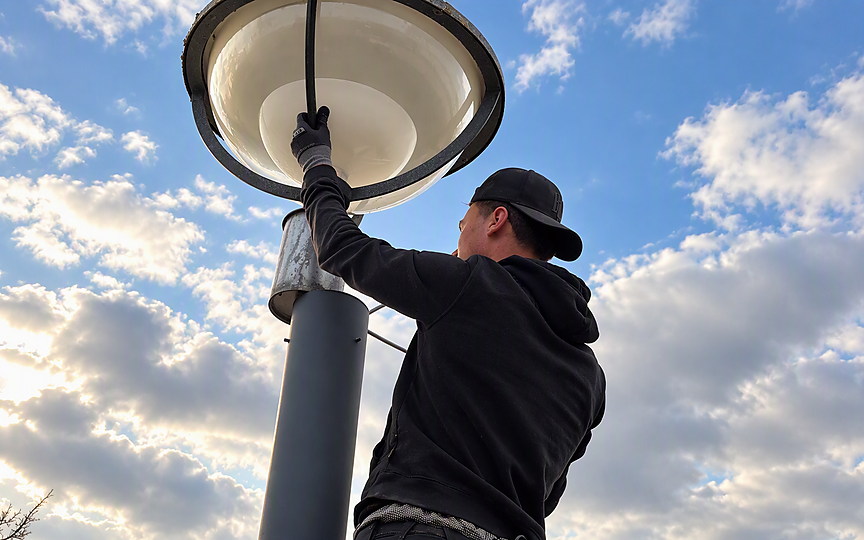
Mario cited replaceable drivers in outdoor luminaires as one example. Other possibilities include changing optics or remanufacturing products where suitable. His explanation remained specific to product capabilities, rather than establishing a universal repairability promise across every fixture.
Can Light-as-a-Service Reach Existing Installations?
The discussion also covered Light-as-a-Service, a model Signify and its predecessor Philips Lighting have developed over many years to provide lighting as a service rather than as a conventional product sale. Under that model, customers purchase an agreed lighting service, while the provider takes responsibility for defined aspects of delivery, maintenance, and upgrades.
I asked whether the approach could work with fixtures already installed in a factory or warehouse. Mario said it can apply to existing installations as well as new ones.
First, however, Signify must assess the equipment’s age, quality, performance, and safety. If an installation can meet the required standards, it may fit a service arrangement. Otherwise, new products may provide the appropriate starting point.
He also identified procurement as a barrier to wider adoption. When buyers prioritize purchase price, they can overlook maintenance, future upgrades, and the cost of operating an installation over many years.
Therefore, Mario encouraged stakeholders to consider the full ownership period. A system intended to serve for 15 or 20 years deserves a purchasing discussion that extends beyond its initial price.
The Opportunity after the First LED Conversion
Mario sees continued opportunity in upgrading both conventional lighting and earlier generations of LED systems. Connected lighting, sensors, and intelligent controls remain central to Signify’s direction, alongside products designed for future repair and upgrades.
His message to the industry was straightforward: circularity needs a strong business case. For owners, that means useful assets, reliable performance, and manageable costs. For manufacturers and service providers, it creates opportunities to support customers throughout an installation’s life.
By linking circular lighting to customer value, the company is helping move the discussion toward practical decisions about what to retain, what to improve, and how to keep lighting performing for years to come.