




IES Looks Beyond Survival Mode with New Growth Strategy
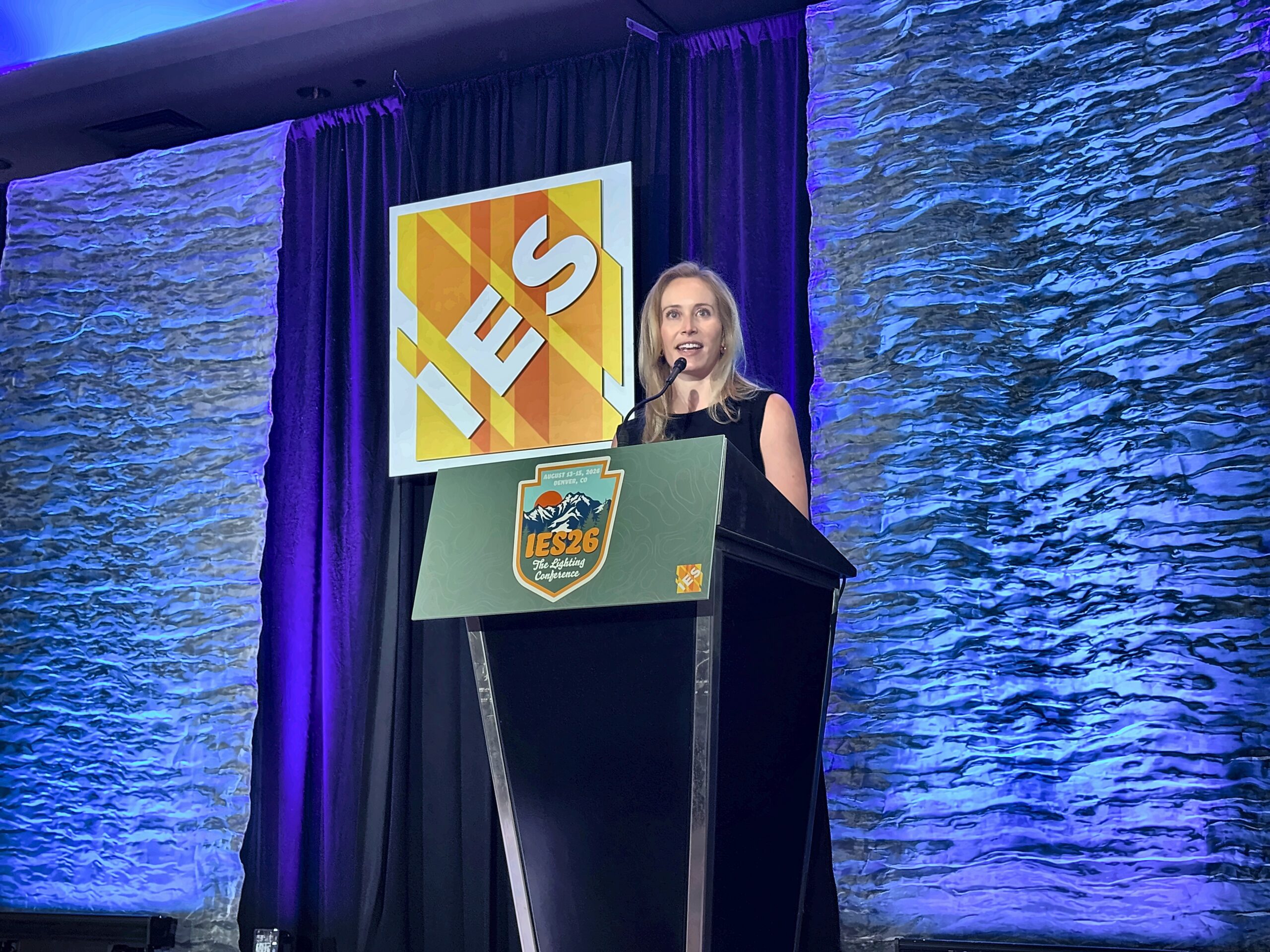
DENVER — IES Looks Beyond Survival could be the theme emerging from IES26 as the Illuminating Engineering Society moves past several years of significant change. IES CEO Colleen Harper says the Society has reached a very different point. “We’re now able to focus on the future instead of operating in survival mode,” she told a standing-room-only audience Friday morning at IES26: The Lighting Conference in Denver. That future includes a new three-year strategic plan, greater international expansion, new membership models, artificial intelligence tools and an updated LC exam.
The presentation offered one of the clearest pictures yet of where IES intends to go next.
A Three-Year Plan Built to Change
At the end of 2025, IES adopted a strategic plan covering 2026 through 2028. Its overarching goal is what Colleen described as “lasting, scalable growth.”
Rather than create a traditional five-year plan and revisit it years later, IES intentionally shortened the planning cycle. The Society also treats the strategy as a living document.
That approach reflects how quickly the lighting industry is changing. Four times each year, when the IES Board meets in person, directors conduct a deep dive into the plan’s strategic pillars and adjust as necessary.
The theme behind the strategy is “Generating Energy and Removing Boundaries.” For IES, those boundaries include geography, membership categories and even the ways people access the Society’s technical information.
IES Pushes Further Beyond North America
One of the most visible changes involves the Society’s international ambitions.
Colleen made a point of reminding attendees that the organization should no longer be called “IESNA.” While that was never its official legal name, the shorthand reinforced the perception of IES as primarily a North American organization.
“It is just IES,” she emphasized.
Today, the Society has members in more than 60 countries, and Colleen believes IES must serve a global lighting community.
A major step comes this year with the launch of an IES China Section. Colleen recognized Charlie Chan, who is helping IES establish the section and develop relationships in the Chinese lighting market. She also discussed IES’s longstanding relationship with IES Australia and New Zealand and its Global Affiliate Access program.
The Society has also expanded conversations with lighting organizations around the world. For the past several years, representatives from approximately 10 organizations have met to discuss opportunities for collaboration. Those meetings will now take place around Light + Building in Frankfurt and Light + Intelligent Building North America in alternating years.
Light + Intelligent Building Will Be “Different”
Colleen also strongly promoted the first Light + Intelligent Building North America, scheduled for Las Vegas next March.
Her message was unmistakable: Don’t expect LightFair with a different name. “It’s going to be completely different from the LightFair you’ve seen in the past,” she said.
LightFair served the industry for decades, but the new event will broaden its emphasis toward connected technologies and intelligent buildings. Colleen repeated that the show “will be different” and encouraged IES26 attendees to make plans for Las Vegas.
That shift is important. It places lighting within the larger conversation about building systems rather than treating it as an isolated technology.
IES Will Manage the National Lighting Bureau
In my humble opinion, one of the most significant announcements of the morning involved the National Lighting Bureau.
Colleen announced that IES has entered into a management agreement with NLB. IES already manages the National Council on Qualifications for the Lighting Professions (NCQLP), which administers the LC credential, and it also manages the Audio Engineering Society.
The agreements are part of a broader strategy.
Each organization pays IES an annual management fee. According to Colleen, these relationships have created a “solid, stable revenue stream” and helped IES expand its staff during the past year.
NLB also brings something different to the relationship. Its mission has historically included communicating the value of good lighting beyond the traditional lighting community. Colleen sees an opportunity to use the relationship to expand consumer-focused education, an area where she said IES members have requested greater activity.
A New Way Into IES
IES is also looking beyond the people who identify lighting as their primary profession.
The Society plans to launch an Allied Organization Membership aimed at people who encounter lighting as part of their jobs but may not work in the industry full-time.
Colleen acknowledged that the lighting industry does a good job of talking to itself. The new membership category is designed to bring adjacent professions into the conversation and give them access to IES resources at a lower membership rate.
Architects, engineers, contractors, interior designers, facility professionals and others can all influence lighting decisions without necessarily considering themselves part of the lighting industry.
Reaching those audiences could become an important growth opportunity for IES.
The LC Exam Is Getting an Update
Transformation does not mean abandoning established programs.
Colleen explained that NCQLP completed a job analysis in 2025 to ensure the LC exam reflects current lighting practice. The organization had received feedback that portions of the exam included outdated questions and legacy technologies.
The update is already underway.
New questions must go through a vetting process to make sure they are clear and produce appropriate responses. Because of the requirements involved in administering a professional credentialing exam, the changes cannot happen overnight.
Still, Colleen was unequivocal: “We are absolutely updating the LC exam.”
 More Than 100 Standards—and AI Is Coming
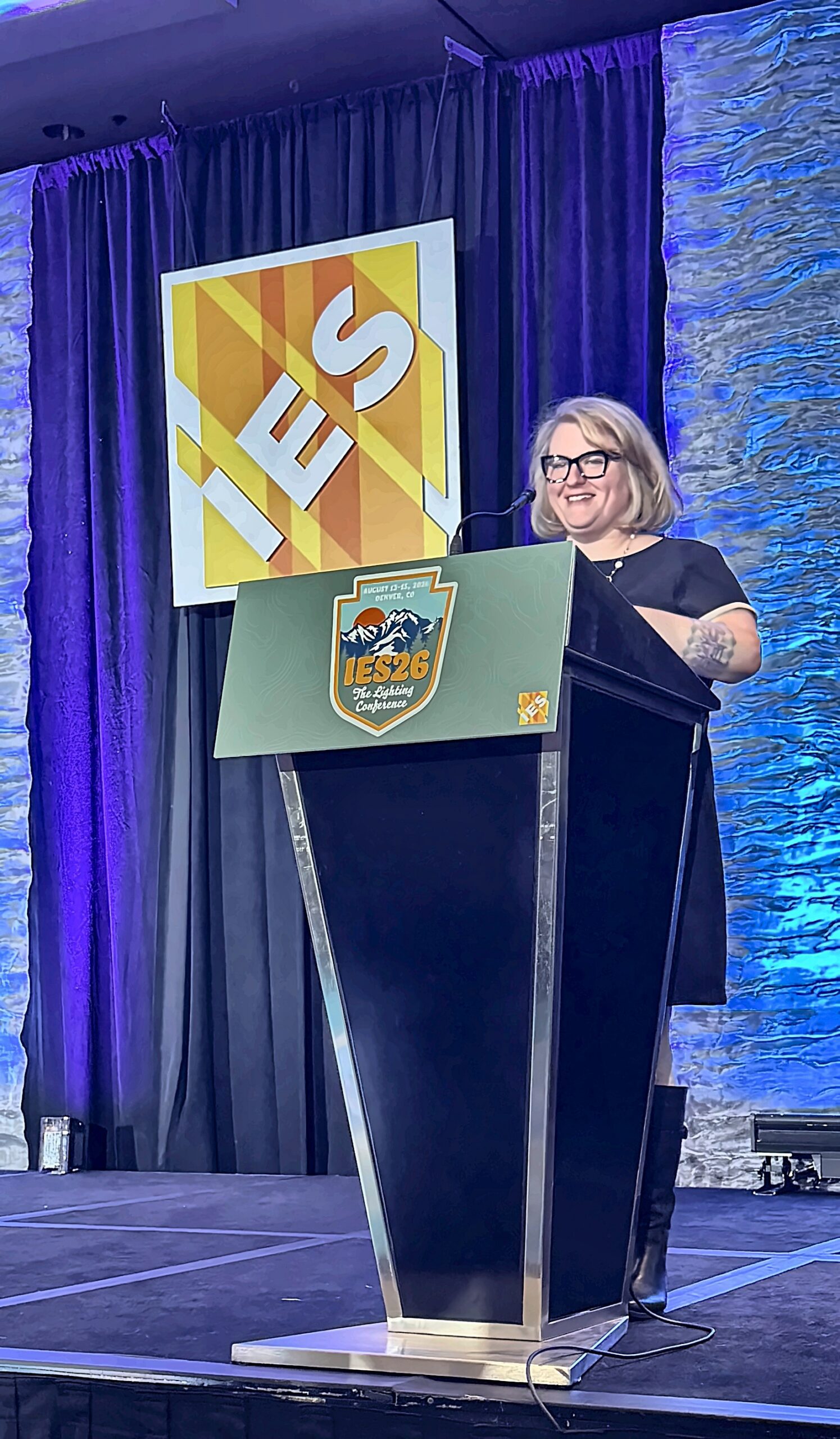
Brienne Willcock followed Colleen and shifted the discussion toward standards and education.
IES currently maintains more than 100 standards, including what Brienne described as the largest collection of application standards of any lighting organization in the world. Although these documents serve as voluntary guidelines, they also find their way into codes and laws.
IES now wants to make that technical knowledge easier to understand and access.
One effort involves communications that answer seemingly basic questions: Who writes standards? Which standard do I need? What do all those letters and numbers mean? Those questions matter when IES wants to reach beyond people who already speak the industry’s language. LM-79 may be instantly recognizable to many EdisonReport readers, but it means very little to someone entering the field.
The more intriguing development involves artificial intelligence.
IES is developing an AI chat tool that will help users navigate Society information and standards. The project remains in its early stages, but the objective is to make IES technical content easier to find and use.
Importantly, Brienne stressed that AI will not replace the standards or the volunteers who develop them. Instead, the technology will provide another way to find and understand that information.
If executed properly, this could become one of IES’s most useful digital initiatives. More than 100 standards represent an enormous body of knowledge, but that knowledge has limited value if users cannot quickly locate the information they need.
Emerging Professionals Can Try Standards Work Before Committing
IES also wants to remove another barrier: the perceived difficulty of becoming involved in standards work.
The Society’s Testing Procedures Committee alone has multiple working groups responsible for approximately 40 documents. That represents an enormous volunteer effort.
For an Emerging Professional, joining such a committee can seem intimidating. IES now allows Emerging Professionals to participate for a year as observers. They can attend meetings, learn how committees operate and decide whether standards work interests them before making a longer commitment.
It is a smart way to expose the next generation to an area of the industry that often happens quietly behind the scenes.
IES Education Approaches 10,000 Users
The numbers behind IES education also tell an interesting story.
The Society’s eLearning platform, launched in 2020, now has 9,941 users, putting it just 59 users short of the 10,000 mark. The Lighting Library has 5,232 users.
Since IES25, the Society has added 1,395 eLearning users and attracted 6,461 webinar participants. During that same period, IES presented 15 webinars and four Light for Life Symposia. The LC Study Group currently has 113 participants.
Those figures show that IES increasingly reaches members well beyond conferences and local section meetings. Education can now occur throughout the year and almost anywhere.
From Survival to Growth
Perhaps the most revealing part of Colleen’s presentation wasn’t a new program or statistic.
It was her description of the Society’s recent past.
She characterized the first three-and-a-half years of her tenure as a period when IES largely operated in “survival mode.” Now, she believes the organization has emerged from those difficult years and can concentrate on its future.
The initiatives presented in Denver support that argument. IES is pursuing international growth, adding management relationships that generate revenue, broadening membership, modernizing the LC exam and experimenting with AI. At the same time, it continues investing in standards and education.
For a 120-year-old organization, balancing those priorities will not always be easy.
But the direction coming out of IES26 was clear: IES isn’t simply trying to preserve what it has. It is looking for ways to expand who it serves, where it operates and how the lighting community accesses its knowledge.